How Do I Use SEOWedge to Optimize for AI Citations in Non-Product Content Like Buying Guides or How-Tos?
SEOWedge discovers the real buyer questions that drive AI citations for non-product content—like buying guides or how-tos—then produces Action Briefs and on-brand drafts that close those exact gaps. You measure which guides or educational pages are missing from AI answers, see why, and generate the content that gets cited. The workflow is built for ecommerce and agency teams who need to win AI visibility beyond just product pages.
By the SEOWedge Research Team · Published August 13, 2026 · Last tested August 13, 2026 · Updated August 13, 2026 · 7 min read
What to take away
- SEOWedge surfaces high-intent non-product buyer questions automatically—no prompt writing needed.
- Action Briefs show which guides or how-tos are missing from AI answers and why.
- The Content Studio generates on-brand buying guides, how-tos, and educational content ready for AI citation.
- Publish Readiness scoring tells you when a page is optimized for AI answers before it goes live.
- You can start with a free scan—no card required—and see real citation gaps for your non-product content.
How does SEOWedge surface non-product buyer questions?
SEOWedge does not require you to write your own prompts or question lists. When you enter your domain, it crawls your site and builds a Brand DNA profile—category, market, and the main conversion goal. From there, SEOWedge automatically discovers the high-intent questions buyers actually ask in your category. This includes not just product queries, but also informational and decision-stage questions that lead to buying guides, how-tos, and educational content.
Each scan returns a set of these buyer questions. On the Free plan, you get 5 questions per scan; on Pro, 12; and on Agency, 25. These questions are phrased exactly as buyers ask them, not as SEO keywords, and reflect the real informational needs that drive AI answers. This is a core difference from prompt-based tools, where you have to guess and maintain your own list. SEOWedge’s discovery method means you see the full range of questions that could lead to a citation, including those that surface non-product pages.
This process ensures you catch opportunities beyond product listings: guides, how-tos, comparison content, and even support or troubleshooting topics. For more detail on how SEOWedge finds these questions, see How Does SEOWedge Find Buyer Questions for My Ecommerce Site?.
Can SEOWedge generate buying guides or how-tos that get cited in AI answers?
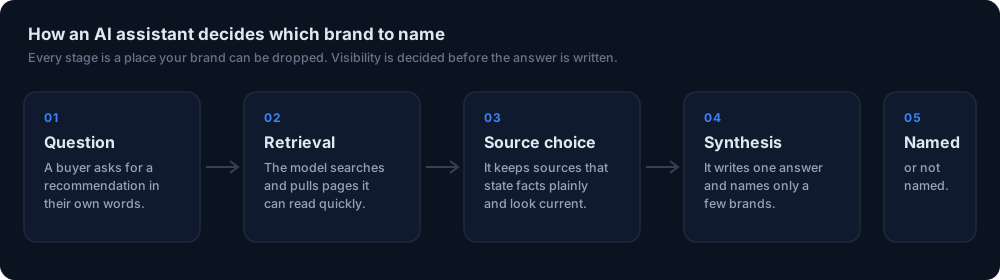
Yes. Once SEOWedge identifies which non-product questions are driving AI answers in your category, it tests those questions against major AI assistants—OpenAI (GPT) on all plans, Google Gemini on paid plans. It records which brands and URLs are cited for each question. When your site is missing from a key answer, SEOWedge produces an Action Brief: the question, why your brand is not cited, and the exact guide or how-to page to create or improve.
You can then use the Content Studio to generate a full draft of the missing guide, how-to, or educational page. This draft is built from your Brand DNA profile, meaning it uses your brand’s voice, product specifics, and value proposition. The system scores each draft for Publish Readiness, so you know before publishing whether the page meets the structure and content depth that AI assistants look for in citations.
You can edit, refine, and export the draft. On paid plans, you can queue several guides or how-tos at once—up to 3 at a time on Pro, 10 on Agency—so you can address multiple gaps efficiently. For a step-by-step guide to creating buying guides with SEOWedge, see How Can I Use SEOWedge to Create Brand-Specific Buying Guides for AI Search?.
What are best practices for structuring non-product content for AI visibility?
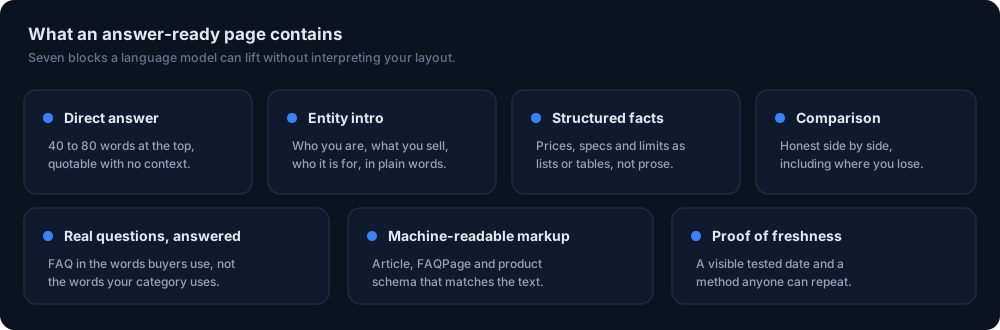
AI assistants like ChatGPT and Gemini cite pages that answer the whole question clearly, with direct, well-structured content. For non-product content—such as buying guides, how-tos, and educational explainers—SEOWedge’s Content Studio applies answer engine optimization (AEO) and generative engine optimization (GEO) principles automatically.
Best practices include:
- Use a clear, descriptive H1 that matches the buyer question.
- Start with a direct, quotable answer or summary.
- Structure the page with step-by-step sections or subheadings that mirror the question’s intent.
- Include concrete facts, examples, or checklists that make the page easy for an AI to lift as a source.
- Add schema markup where relevant (FAQPage, HowTo, or Article), but always match what’s visible on the page. For schema specifics, see Structured Data for AI Search: What to Mark Up and What to Skip.
SEOWedge’s Publish Readiness score reflects how well your draft meets these criteria before you export or publish. This means you can be confident your guide or how-to is structured for AI citation, not just for SEO.
How does SEOWedge measure which non-product pages are missing from AI answers?
After discovering buyer questions, SEOWedge tests each one against supported AI assistants. For each question, it records which brands and specific URLs are cited in the AI answer. The result is an AI-Visibility score for your domain, a competitor share-of-voice chart, and a list of page-level gaps—showing exactly which guides, how-tos, or educational pages are being cited instead of yours.
You see not just if your brand is missing, but which competitor’s guide or informational page is being named, and for which question. This lets you target the most valuable non-product content opportunities first. The scan also shows whether your existing guides or how-tos are being cited, and if not, whether the issue is content structure, authority, or coverage of the buyer’s real question.
This measurement is a snapshot: it records what the AI assistants answered on the day of the scan, using the discovered question set. For more on how SEOWedge measures AI assistant recommendations and citations, see How Does SEOWedge Measure Which AI Assistants Recommend My Brand?.
How do I turn a non-product citation gap into a published, AI-ready page?
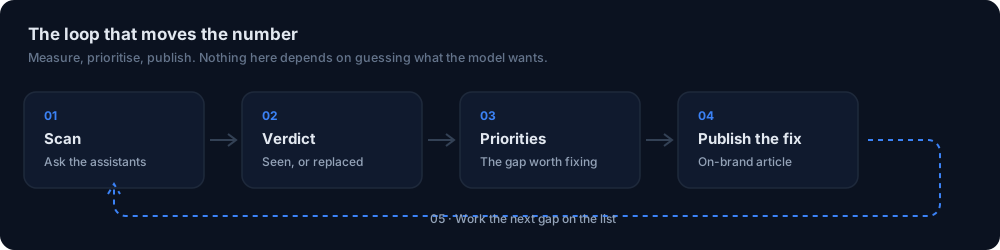
Once SEOWedge identifies a missing guide or how-to, the Action Brief explains why your brand is not cited and what kind of page is needed. The Content Studio then generates a draft based on your Brand DNA, tailored to the exact question and citation gap. You can review, edit, and refine the draft to ensure it matches your expertise and brand standards.
The Publish Readiness score shows whether the page is likely to be cited by AI assistants. This score is deterministic: it checks for direct answers, clear structure, and coverage of the full buyer question. When the score is high, you can export and publish the guide or how-to on your site. SEOWedge then submits the new URL through IndexNow, so engines like Bing and participating AI assistants see the update sooner (IndexNow documentation).
This workflow closes the loop: from measuring the gap, to producing the answer-ready content, to publishing and notifying AI engines. For more detail on how a gap becomes a published page, see How SEOWedge Turns AI Visibility Gaps Into Actionable Content.
What makes SEOWedge’s workflow different for non-product content?
Most tools in this space focus on product or category pages, or require you to write and maintain your own prompt list. SEOWedge automatically discovers the full spectrum of buyer questions—including those that lead to guides, how-tos, and support content—without manual prompt writing. Every output is shaped by your Brand DNA, so even educational or explainer pages reflect your expertise and positioning.
The workflow is built for ecommerce and agencies: you see which non-product pages are actually being cited, get Action Briefs for each gap, and can generate multiple guides or how-tos at once on paid plans. There’s no need to buy a separate content generator or manage handoffs between tools. The Publish Readiness score ensures you don’t waste time publishing guides that won’t get cited.
For a detailed look at how SEOWedge adapts to non-product and informational pages, see How Do I Use SEOWedge to Generate Citation-Ready Content for Non-Product Pages?.
How do I measure success for non-product AI citation efforts?
Success is measured by whether your non-product pages—guides, how-tos, explainers—are named or cited in AI answers for relevant buyer questions. SEOWedge gives you an AI-Visibility score for your domain, a share-of-voice breakdown against competitors, and a record of which pages are being cited for each question. After publishing a new guide or how-to, you can run a new scan to see if your page is now being cited by AI assistants.
Because AI answers are sampled and change as models re-crawl the web, SEOWedge records the sampled answer for each question and platform, with a date stamp. This gives you a defensible record of before-and-after states. You can pair SEOWedge’s citation data with your own analytics to track changes in traffic or conversions from AI-driven search.
For more on interpreting AI-Visibility scores and share-of-voice, see What an AI Search Visibility Score Actually Measures.
What is the fastest way to start optimizing non-product content for AI citations?
You do not need a paid plan to start. Enter your domain and run a free scan—no card required. SEOWedge will crawl your site, discover high-intent buyer questions (including non-product ones), and show you which guides, how-tos, or educational pages are missing from AI answers. You get one Action Brief and one free article draft to test the workflow.
If you want to address more gaps or generate multiple guides at once, upgrade to Pro or Agency for higher limits and bulk actions. Paid plans also test your content against Google Gemini, not just OpenAI. Credit top-ups let you scale up during busy months without changing plans. For a breakdown of what’s free and what’s paid, see Free AI Search Audit by SEOWedge: What You Get, Instantly and Pricing.
This workflow lets you move from measurement to action in one loop—no separate tools or manual prompt writing required. The next step: run your free scan and see which non-product content gaps are costing you AI citations.
How this was tested
All product claims and workflow steps are based on the current SEOWedge production release as of 2026-08-13. The process and numbers described—such as discovered buyer questions per scan, Action Briefs, and article generation—are taken from SEOWedge's published plan and feature documentation. Claims about AI citation, model behavior, and assistant sampling are based on direct measurement within SEOWedge and public documentation from OpenAI and Google. Screenshots and diagrams are sourced from the SEOWedge interface and workflow as tested on the same date.
What this page does not cover
This page focuses on optimizing non-product content—buying guides, how-tos, and educational or support pages—for AI citations using SEOWedge. It does not cover technical crawlability, product page optimization, or multilingual workflows in detail; see the LLM SEO technical guide and product page visibility guide for those. All numbers and workflows are current as of 2026-08-13 and may change with platform updates or new AI assistant behaviors.
Questions buyers ask us
Does SEOWedge only work for product pages, or can I optimize guides and how-tos too?
SEOWedge is built to surface and close AI citation gaps for all high-impact ecommerce content, including buying guides, how-tos, and educational pages. It automatically discovers buyer questions that lead to these non-product citations and produces Action Briefs and drafts for them.
How do I know which non-product pages are missing from AI answers?
Each SEOWedge scan shows which buyer questions are being answered by AI assistants, which brands and URLs are cited, and where your own guides or how-tos are missing. You get a page-level gap list, so you can target the exact opportunities that matter.
Can SEOWedge write a draft buying guide or how-to that matches my brand voice?
Yes. SEOWedge uses your Brand DNA profile—built from your site crawl—to generate content in your brand’s tone, with your product and market specifics. You can edit the draft before publishing, and the Publish Readiness score shows when it’s optimized for AI citation.
How do I structure a how-to or guide so it gets cited by AI assistants?
Start with a clear, direct answer to the buyer question, use step-by-step or checklist sections, and include concrete facts or examples. SEOWedge’s Content Studio applies these AEO and GEO best practices automatically. For more detail, see Answer Engine Optimization (AEO): How to Become the Quoted Source.
What happens after I publish a new guide or how-to page?
SEOWedge submits the new URL through IndexNow to notify participating search engines and AI assistants. You can run a new scan later to check if your page is now being cited for the target question, and compare before-and-after results.
Is there a way to test SEOWedge for non-product content without paying?
Yes. The free plan gives you one scan, five discovered questions, one Action Brief, and one article draft—enough to see how SEOWedge surfaces and closes non-product citation gaps. No card is required to start.
See what AI assistants say about your site
Enter your domain and SEOWedge runs a free scan: your AI-Visibility score, the buyer questions where a competitor is named instead of you, and the first page to fix. No install, no sales call.