
How to Rank in Google AI Overviews and AI Mode: Step-by-Step
Google AI Overviews choose sources based on original, first-hand content that directly answers a family of related buyer questions. AI Mode expands on this by breaking queries into sub-questions and synthesizing results, so your pages must cover the full problem, not just a single phrase. To be cited, your content needs to be accessible, answer-focused, and grounded in unique expertise. SEOWedge measures and closes these gaps by tracking which brands are named, identifying missing pages, and producing action-ready content for AI inclusion.
By the SEOWedge Research Team · Published August 11, 2026 · Last tested August 12, 2026 · Updated August 12, 2026 · 6 min read
What to take away
- Google AI Overviews cite sources with first-hand, original content that answers buyer questions directly.
- AI Mode breaks one question into several, rewarding pages that cover the whole problem space.
- Ranking below the Overview now means lost clicks, even if your classic SEO ranking holds.
- Track inclusion by sampling AI answers and recording which brands are named—analytics alone cannot show this.
- SEOWedge closes the loop: it measures, names the gap, and produces the page to win AI citations.
How Does Google Choose Sources for AI Overviews?
Google AI Overviews cite sources that provide original, first-hand content addressing the full scope of a buyer’s question. The system favors pages that offer details not found on commodity aggregator sites—think unique experience, specific data, or a step-by-step answer. Google’s documentation states that no special markup or llms.txt is required, but content must be accessible and directly answer the underlying intent of the query. If your page is thin, generic, or repeats what’s widely available, it is less likely to be chosen.
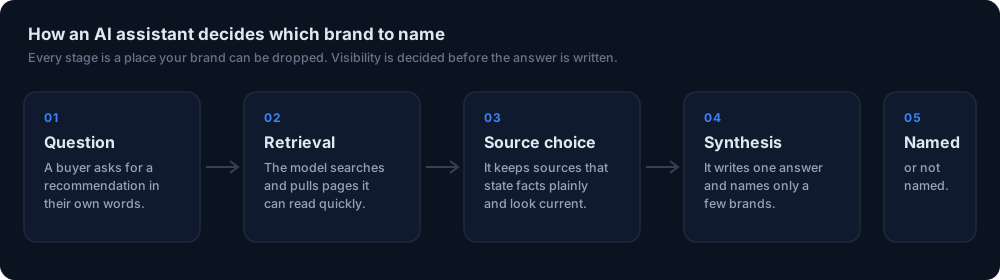
AI Overviews do not simply lift the top organic result. Instead, they select passages from multiple sources that together answer the question. Your content must be structured so that a model can extract a relevant passage and attribute it clearly. This means using question-and-answer blocks, clear headings, and explicit claims grounded in your own expertise.
SEOWedge samples which brands and URLs are named in AI Overviews by sending real buyer questions to Google Gemini and recording the cited sources. The result is a dated, platform-specific observation you can track over time, not a guess or a simulated ranking.
How Is AI Mode Different from an AI Overview?
Google’s AI Mode goes beyond the standard Overview by breaking a user’s question into several sub-questions, then synthesizing answers from multiple sources. This is called query fan-out. For example, a search for "best hiking boots for wide feet in wet weather" might be split into sub-queries about fit, waterproofing, and comfort. Pages that only answer one part of the problem will be less likely to be cited than those that cover the whole decision process.
To optimize for AI Mode, your content must anticipate the related questions Google will generate. This means building pages that address the full family of buyer concerns, not just a single keyword or product attribute. Google’s documentation confirms this approach: coverage breadth and explicit answers to related sub-questions increase your chance of being cited in AI Mode. See Google: AI features and your website for the official source.
SEOWedge’s scan discovers the high-intent buyer questions and tests your pages against the full set, showing which questions you answer well and where you are missing coverage. This is how you know which gaps cost you AI Mode citations.
Why Did My Clicks Fall Even Though My Ranking Held?
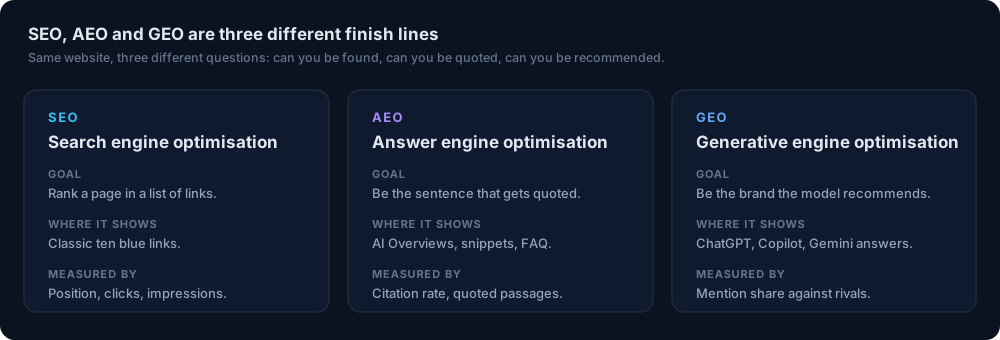
When Google launched AI Overviews, the classic blue-link results were pushed further down the page. Even if your page still ranks organically, the AI Overview or AI Mode answer now appears above it and often satisfies the user’s need directly. This change means fewer clicks for traditional organic results, especially for queries that are well-served by a synthesized AI answer.
Your analytics will show a drop in traffic even though your keyword ranking in classic SEO tools is unchanged. The missing piece is whether your brand is being cited or recommended in the AI answer itself. If you are not named or linked in the Overview, you lose out on both visibility and click opportunity.
SEOWedge measures whether your brand is actually cited in AI Overviews and AI Mode, not just where you rank in blue links. This lets you see the true cause of traffic drops and act on the real gap.
What Page Changes Increase the Chance of Being Cited?
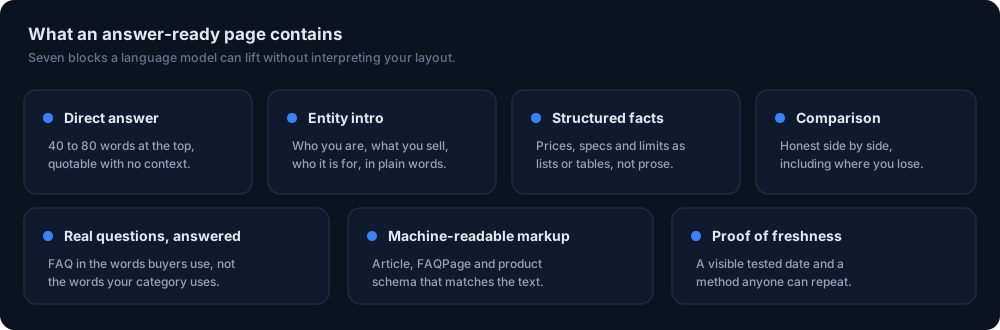
Pages that win citations in Google AI Overviews and AI Mode share several traits. First, they answer the full buyer question in detail, using explicit headings and direct-answer blocks. Second, they ground every claim in first-hand experience, data, or unique expertise—Google’s documentation calls this "original, first-hand, non-commodity content." Third, they use clear, extractable language so a model can lift a passage and attribute it.
To improve your odds, structure your content with the following in mind:
- Use question-and-answer sections for each buyer concern.
- Include step-by-step guides, original data, or unique comparisons.
- Match schema markup to visible text, but do not rely on markup alone—Google does not require special AI markup (see schema guidance).
- Ensure your site is crawlable and that new content is submitted via sitemap or IndexNow for faster discovery (IndexNow documentation).
SEOWedge’s Action Briefs identify which pages are missing or underperforming for specific buyer questions, then generate a draft page that follows these patterns. Each draft is scored for "Publish Readiness" before you export or go live.
How Do I Track Whether I Am Being Included in AI Overviews?
Analytics cannot show if you are cited in an AI Overview or AI Mode answer—only whether you received a click. To track true AI search visibility, you need to sample AI answers for your real buyer questions and record which brands and URLs are named.
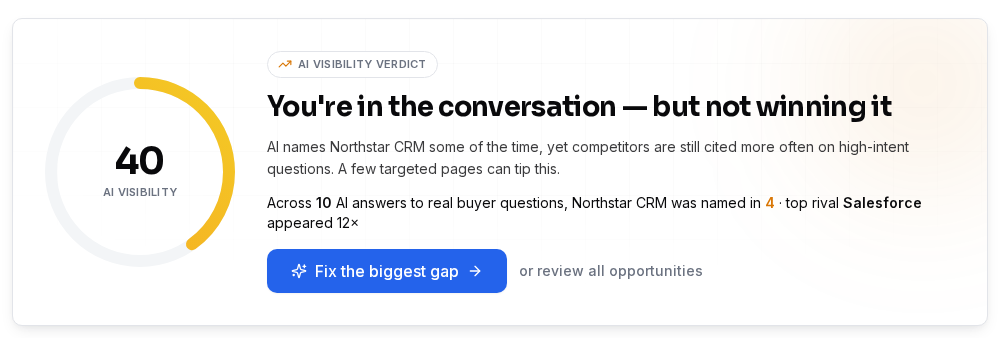
SEOWedge does this by sending the discovered question set to Google Gemini, then storing which brands are cited for each query. Each scan is dated and repeatable, so you can see if your inclusion rate changes after you update or publish new content. The result is an AI-Visibility score and a competitor share-of-voice breakdown for Google’s AI surfaces, not just for classic organic rankings.
This measurement is what lets you prove progress to a client, board, or team—showing movement in AI citations, not just in traffic or rankings. For a deeper explanation of the metric, see what an AI search visibility score measures.
What Is Realistically Outside My Control?
Several factors in AI Overviews and AI Mode are outside your direct control. Google’s AI systems may not crawl or re-crawl your new content immediately, even if you submit a sitemap or use IndexNow. Inclusion in the Overview is not guaranteed, even for well-structured, original pages—Google’s documentation notes that submission does not guarantee indexing or citation. The model may also blend answers from multiple sources, so even a cited page may not receive a click if the answer is fully synthesized.
You cannot force Google to cite your page, nor can you control how the AI rewrites or summarizes your content. What you can control is the quality, originality, and breadth of your answer, plus technical accessibility and prompt notification of new URLs. SEOWedge is built for this reality: it measures what is observed, not what is promised, and tracks changes over time so you see real movement, not just a one-off result.
For technical details on ensuring crawlability and optimizing for LLM retrieval, see LLM SEO: Technical Guide.
Where Does SEOWedge Remove the Manual Work?
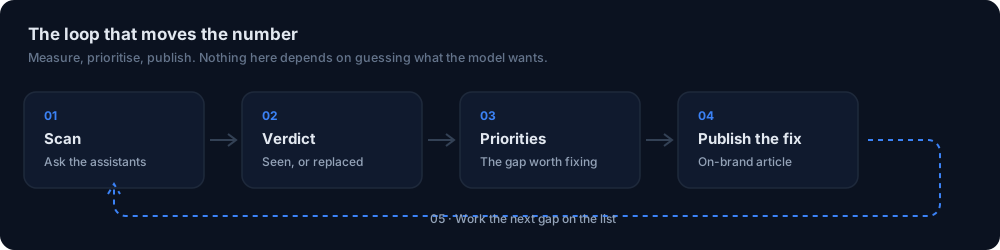
SEOWedge closes the loop between measurement and action for Google AI Overviews and AI Mode. The process starts with a scan: enter your domain and SEOWedge crawls your site, discovers the buyer questions that matter for your category, and tests your pages against those questions on Google Gemini. It records which brands are cited and where you are missing out.
For every missed opportunity, SEOWedge produces an Action Brief: which page is missing or underperforming, why another brand is being named, and what content is needed to fill the gap. The Content Studio then drafts a new page from your Brand DNA profile, with a deterministic "Publish Readiness" score to ensure the draft is answer-ready before you go live.
This single workflow replaces manual prompt writing, answer sampling, and page drafting. Paid plans let you queue multiple articles at once, so a whole gap list can be addressed in one pass. The free scan gives you a real result—an AI-Visibility score and a named opportunity—without requiring a card or commitment. For a step-by-step on what a scan delivers, see the Free AI Search Audit guide.
How this was tested
All claims and process details on this page are based on SEOWedge’s workflow as of 2026-08-12. SEOWedge samples Google Gemini (the engine behind AI Overviews and AI Mode) via API, recording which brands and URLs are cited for real buyer questions. The measurement is a dated, reproducible observation, not a simulated ranking. All Google process references are drawn from the official Google AI optimization guide as of August 2026.
What this page does not cover
This page covers only Google’s AI Overviews and AI Mode, not classic blue-link SEO or assistant answers from OpenAI or Microsoft. For technical LLM SEO, see LLM SEO: Technical Guide. For answer engine optimization craft, see AEO Guide. All workflow and measurement details are current as of 2026-08-12 and may change if Google updates its AI surfaces or citation behavior.
Questions buyers ask us
Does Google require special markup or llms.txt for AI Overviews?
No. Google’s official documentation states that no special AI markup or llms.txt file is required for inclusion in AI Overviews or AI Mode. Focus on original, first-hand content and technical accessibility instead. See Google’s AI optimization guide.
How quickly does new content appear in AI Overviews?
There is no fixed timeline. Google may take days or weeks to crawl and index new pages, even if you submit a sitemap or use IndexNow. Inclusion is not guaranteed, but prompt notification and technical accessibility help reduce the lag.
Can I track AI Overview inclusion with Google Analytics or Search Console?
No. Analytics and Search Console only report on clicks and impressions in classic blue-link results. They do not show whether your brand is cited in AI Overviews or AI Mode. You need to sample AI answers for your target questions and record which brands are named. SEOWedge automates this measurement.
What if my competitor is always cited instead of me?
This usually means their content better answers the full buyer question or provides more original, first-hand information. SEOWedge’s Action Briefs identify the specific gap and generate a draft page tailored to close it. You can then publish and track whether the citation moves on the next scan.
Is there a free way to check if I’m named in Google AI Overviews?
Yes. SEOWedge offers a real free scan—no card required—that tests your site against discovered buyer questions and shows if you are cited in Google Gemini answers. The result includes an AI-Visibility score and a named opportunity for improvement. See Free AI Search Audit for details.
Where can I learn more about on-page structure for AI answers?
For detailed guidance on structuring pages for direct lift by AI, see the AEO Guide. For schema and technical markup, see Structured Data for AI Search.
See what AI assistants say about your site
Enter your domain and SEOWedge runs a free scan: your AI-Visibility score, the buyer questions where a competitor is named instead of you, and the first page to fix. No install, no sales call.