GEO vs AEO vs SEO: Clear Definitions and When to Use Each
GEO (Generative Engine Optimization), AEO (Answer Engine Optimization), and classic SEO target different surfaces and outcomes. GEO is about being named and cited in AI-generated answers. AEO is about structuring content so answer engines can quote it directly. Classic SEO aims for rankings and clicks in traditional search. These do not replace each other; they stack, and your priority depends on where your buyers actually get answers.
By the SEOWedge Research Team · Published August 11, 2026 · Last tested August 12, 2026 · Updated August 12, 2026 · 7 min read
What to take away
- GEO means being named or cited in AI-generated answers—measured by who assistants recommend.
- AEO is about structuring content so answer engines can quote your page directly, not just rank it.
- Classic SEO aims for rankings and clicks in traditional search, still critical for organic traffic.
- You need GEO and AEO if buyers use ChatGPT, Gemini, or Google AI Overviews for purchase research.
- SEOWedge measures and closes GEO and AEO gaps, producing ready-to-publish pages from your own brand profile.
What Is the Real Difference Between GEO, AEO, LLM SEO, and Classic SEO?
GEO, AEO, LLM SEO, and classic SEO each target a different way people get answers online. GEO (Generative Engine Optimization) is about being named or cited in AI-generated answers—think ChatGPT, Gemini, or Google AI Overviews. AEO (Answer Engine Optimization) focuses on making your content quotable by answer engines, so your wording is lifted verbatim. LLM SEO (Large Language Model SEO) is the technical layer: making sure AI agents can crawl, parse, and retrieve your content. Classic SEO is about ranking in traditional search results and driving clicks to your site.
These disciplines overlap but do not replace each other. GEO and AEO stack on top of classic SEO. If you only do SEO, you may still get traffic from search, but you risk being invisible in AI answers. If you only do GEO or AEO, you may win citations but miss out on organic traffic. Each discipline is now a required layer if your buyers use both search and AI assistants.
For a glossary of all these terms, see the AI Search Optimisation Glossary.
| Discipline | Primary Surface | What Is Measured | Main Skillset |
|---|---|---|---|
| GEO | AI assistants, AI Overviews | Brand mentions, citations, share of voice in AI answers | AI answer analysis, gap identification, content creation |
| AEO | Answer engines, direct answer blocks | Passages quoted verbatim, inclusion in AI answers | Content structuring, schema, direct-answer writing |
| LLM SEO | AI crawlers and retrieval systems | Crawlability, chunking, retrieval coverage | Technical SEO, crawl management, markup |
| Classic SEO | Search results pages (SERPs) | Rankings, organic clicks, impressions | Keyword research, link building, on-page SEO |
How GEO, AEO, LLM SEO, and SEO differ in surface, measurement, and skillset.
Do GEO, AEO, and SEO Replace Each Other or Stack?
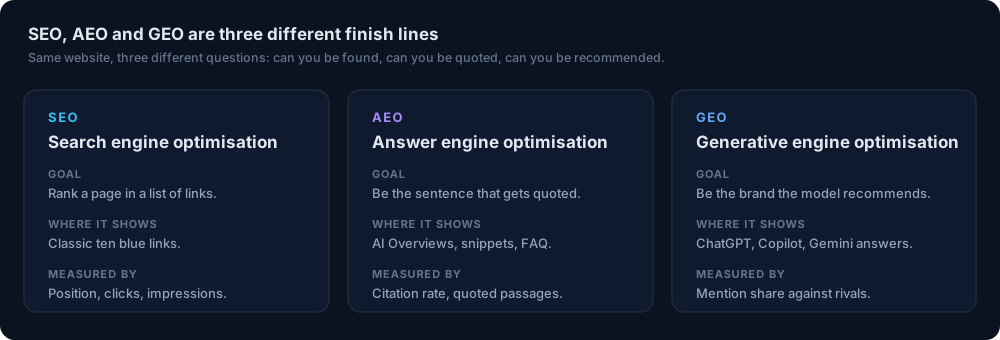
These disciplines stack. GEO and AEO add new requirements on top of classic SEO—they do not replace it. If you only optimize for traditional SEO, you may rank in search but miss being named in AI-generated answers. If you only focus on GEO or AEO, you might win citations but lose organic traffic from classic search.
AI assistants pull from the open web, but their answer selection logic is not the same as Google’s blue links. GEO asks: does the AI name you, or your competitor? AEO asks: does the AI quote your page, or someone else’s? LLM SEO ensures your content is even reachable by AI crawlers. Classic SEO still matters for traffic and authority, but it is no longer the only surface that drives buyer decisions.
For a detailed breakdown of how these layers interact, see the GEO practical guide and the AEO page-level guide.
Which One Matters Most for My Business Right Now?
It depends on where your buyers get answers. If they use ChatGPT, Gemini, or Google AI Overviews to research products, GEO and AEO are urgent. If your traffic is still primarily from classic search, SEO remains critical. Most ecommerce and agency teams now need all three: SEO for rankings, AEO for quotable content, and GEO for share of voice in AI answers.
SEOWedge measures your brand’s visibility in AI answers and shows exactly which competitors are being named instead of you. It then produces the action briefs and ready-to-publish pages that close those gaps. This is built for teams who need to see and act on their AI search visibility without waiting for anecdotal evidence or a drop in traffic.
If you are unsure where your buyers are searching, start with a free AI search audit to get a current visibility score and competitor comparison.
What Is Actually Measured in GEO, AEO, and SEO?
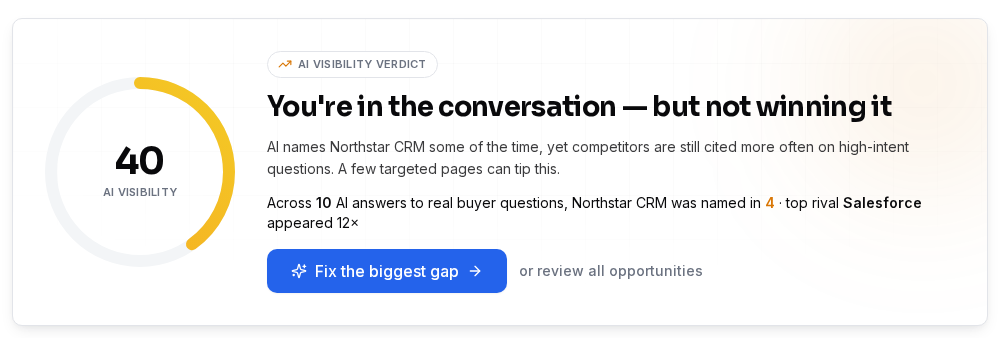
GEO measures whether your brand or product is named or cited in AI-generated answers. SEOWedge samples answers from OpenAI (GPT) and Google Gemini, records which brands are named, and scores your share of voice. AEO measures whether passages from your pages are quoted verbatim by answer engines. Classic SEO measures rankings, impressions, and clicks in traditional search results.
SEOWedge’s AI-Visibility score is based on sampled answers to buyer questions discovered for your category. The platform records which brands are named, which pages are cited, and what exact gaps exist between your content and what the AI recommends. This is fundamentally different from tracking search rankings or keyword positions.
For details on how the AI-Visibility score is calculated and what it means, see the AI Search Visibility Score explainer.
Which Skills and Tools Does Each Discipline Require?
Classic SEO requires keyword research, on-page optimization, link building, and technical SEO. AEO adds the need to structure content for direct answer extraction: answer-ready blocks, schema markup, and quotable passages. GEO requires analyzing AI answers, identifying visibility gaps, and producing content that closes those gaps—often at a faster pace and with more iteration than classic SEO.
LLM SEO is the technical foundation: you must ensure AI crawlers (like OpenAI’s OAI-SearchBot and Google’s Gemini crawlers) can reach and parse your site. This includes correct robots.txt, sitemaps, and chunking of content for retrieval. SEOWedge automates the discovery of buyer questions, runs AI answer sampling, and produces the action briefs and content drafts needed for GEO and AEO—all from a single loop, without requiring prompt writing or manual question lists.
For a checklist of AEO skills and implementation steps, see the AEO checklist for ecommerce. For technical LLM SEO checks, see the LLM SEO technical guide.
What Happens If I Only Do Classic SEO?
If you focus only on classic SEO, you may still rank in search and receive organic traffic. However, you risk being invisible in AI-generated answers, which are now a primary source of product recommendations and information for many buyers. AI assistants do not always cite the top organic result; they choose sources based on retrieval, quotability, and authority in a different way.
This means your competitors could be named in ChatGPT or Gemini answers even if you outrank them in Google search. You might also miss out on being quoted in Google AI Overviews or other answer engine surfaces, which can lead to a drop in brand awareness and consideration—even when your traffic numbers look stable.
To see a practical example of how this plays out, and how SEOWedge closes the gap, see Why ChatGPT Recommends Your Competitors.
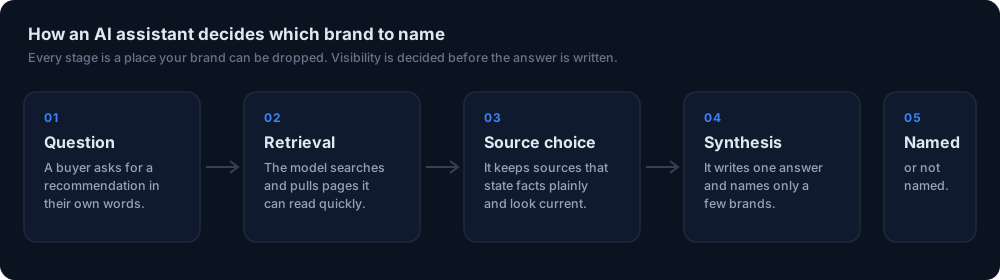
How Does SEOWedge Remove the Manual Work in GEO and AEO?
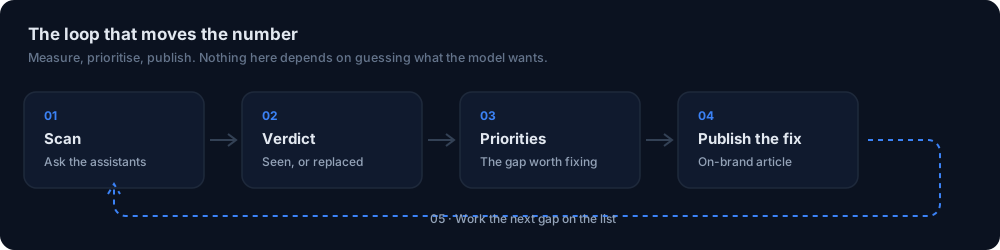
SEOWedge automates the full loop: it crawls your site, discovers the buyer questions that matter, samples AI answers from OpenAI (GPT) and Google Gemini, and records which brands and pages are named. It then identifies the exact content gaps and generates ready-to-publish pages based on your brand profile. Each draft is scored for publish readiness, and published URLs can be submitted through IndexNow for faster assistant recrawling.
Unlike tools that require you to write and maintain prompt lists, SEOWedge discovers the real buyer questions for your category every scan. This means you see the actual questions buyers are asking and how AI assistants answer them. The workflow is designed for ecommerce brands and agencies who need to act on AI search visibility, not just monitor it.
You can see a public sample report and the workflow in action at the SEOWedge sample report.
What’s My Next Step If I Need to Decide or Act?
If your team needs to arbitrate between GEO, AEO, LLM SEO, and classic SEO, start by mapping where your buyers get answers. If AI assistants and answer engines are part of that journey, you need to add GEO and AEO to your workflow. SEOWedge provides a free, no-card-needed scan that shows your current AI search visibility, competitor share of voice, and the exact page-level gaps costing you citations.
You can use SEOWedge’s free audit to get an immediate, defensible answer to "do we show up in ChatGPT or Gemini?" and see what to do next. From there, you can decide whether to layer in AEO and LLM SEO skills, or to automate the loop with SEOWedge’s paid plans.
For a deeper dive into the practical steps, see the GEO practical guide or start a free AI search audit now.
How this was tested
Definitions and distinctions are based on current industry usage and documentation as of 2026-08-12. Measurement mechanisms are described using SEOWedge’s workflow and sampling method: AI answers are sampled from OpenAI (GPT) and Google Gemini, with visibility scored per platform. Table and comparison details reference the SEOWedge method and public documentation from OpenAI and Google. No claims are made about other tools’ features or results unless specifically cited or linked.
What this page does not cover
This page defines GEO, AEO, LLM SEO, and classic SEO as they apply to practical optimization and measurement. It does not repeat deep tactical guides for each (see linked resources), nor does it cover enterprise search, paid search, or web analytics. All product examples use SEOWedge’s workflow and measurement scope. For technical implementation, see the linked guides for each discipline.
Questions buyers ask us
Can I just keep doing classic SEO and ignore GEO and AEO?
You can, but you risk being invisible in AI-generated answers, even if you still rank in traditional search. AI assistants use different selection logic and may recommend your competitors instead. GEO and AEO are now required layers if your buyers use AI assistants for research.
How do I know if GEO or AEO is more urgent for my business?
Check where your buyers get answers. If they use AI assistants like ChatGPT, Gemini, or Google AI Overviews, GEO and AEO are both urgent. GEO is about being named or cited; AEO is about being directly quoted. SEOWedge’s free scan shows which gaps are costing you citations right now.
Is there overlap between GEO, AEO, and LLM SEO?
Yes, they overlap. LLM SEO is the technical foundation for both GEO and AEO: if AI crawlers can’t reach your site, you can’t be named or quoted. GEO and AEO focus on content and visibility in AI answers, but both depend on LLM SEO being in place.
Do I need new tools for GEO and AEO, or can I use my current SEO stack?
Classic SEO tools do not measure or close GEO and AEO gaps. You need tools that sample AI answers, discover real buyer questions, and produce content ready for AI citation. SEOWedge is built for this loop—see how it works for ecommerce and agencies.
How does SEOWedge measure GEO and AEO visibility?
SEOWedge samples answers from OpenAI (GPT) and Google Gemini, records which brands and pages are named, and scores your share of voice. It identifies the exact content gaps and produces ready-to-publish drafts to close them. Each scan is reproducible and tied to real buyer questions, not just keyword prompts.
See what AI assistants say about your site
Enter your domain and SEOWedge runs a free scan: your AI-Visibility score, the buyer questions where a competitor is named instead of you, and the first page to fix. No install, no sales call.