How to Get My Brand Cited in AI Answers (ChatGPT, Gemini, Copilot)
To get your ecommerce brand cited in AI answers from ChatGPT, Gemini, or Copilot, you need to identify the buyer questions where your brand is missing, create answer-ready content that matches what AI assistants want to cite, and ensure your site is crawlable by their bots. SEOWedge measures where you’re skipped, names the exact competitor page being cited, and writes the missing page from your brand profile, closing the loop to win citations.
By the SEOWedge Research Team · Published August 12, 2026 · Last tested August 12, 2026 · Updated August 12, 2026 · 6 min read
What to take away
- AI assistants cite brands they can crawl, trust, and find relevant for buyer questions.
- Most missed citations happen because your site lacks an answer-ready page or blocks AI crawlers.
- You need content that directly answers high-intent buyer questions, in a structure AIs can lift verbatim.
- SEOWedge scans your site and market, finds the missed opportunities, and writes the pages that close those gaps.
- Start with a free scan—no card needed—to see which questions cost you citations and what to fix first.
Why Isn’t My Brand Named in AI Answers?
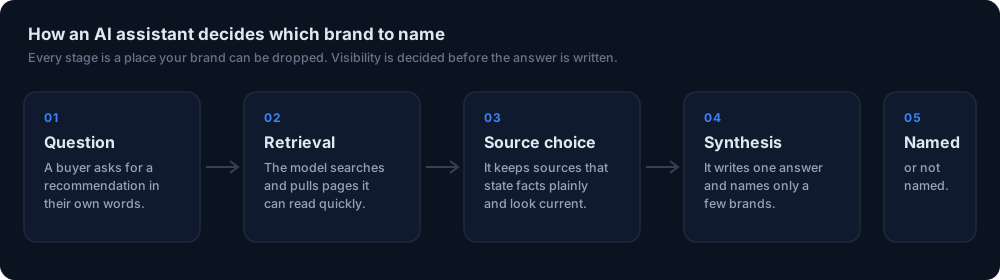
AI assistants like ChatGPT and Gemini cite brands based on what they can crawl, trust, and retrieve as a direct answer to buyer questions. If your brand is missing, it’s usually because your site lacks a page that answers the question in a way the AI can lift, or because your site blocks the necessary crawlers. OpenAI’s OAI-SearchBot and Googlebot must be allowed to index your site; blocking them means your pages are invisible to these engines (OpenAI crawler documentation).
Another common cause is that your content is too generic, too thin, or doesn’t match the structure AI assistants look for when assembling an answer. AI models are trained to extract clear, direct passages that map to a buyer’s question. If your competitor’s page is more answer-ready, they get cited. SEOWedge identifies exactly which competitor and which page are being named instead of you, so you know what needs to change.
If you want to understand the technical layer—how AI assistants crawl and chunk your site—see the LLM SEO technical guide. For most ecommerce brands, the main gap is not technical, but content: you’re missing the right page, or the right answer structure.
What Kind of Content Gets a Brand Cited in AI Answers?
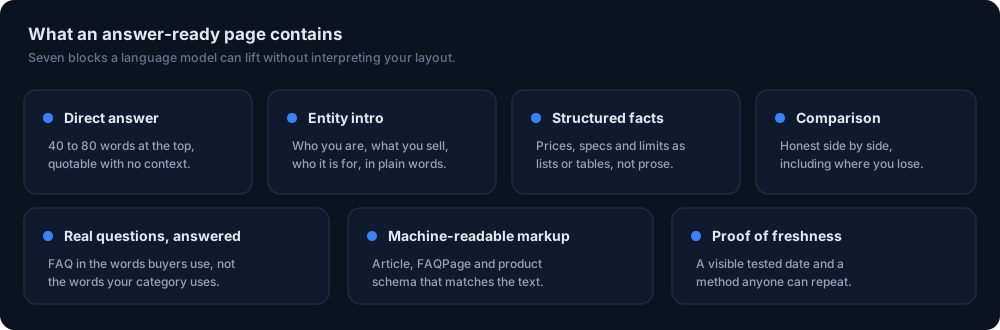
AI assistants cite passages that directly and clearly answer buyer questions, using language and structure that matches the question intent. Pages that win citations usually have:
- A clear, direct answer to a high-intent buyer question (e.g., “What’s the best running shoe for flat feet?”)
- Specific product or category information, not just general advice
- Structured data where appropriate, but always matching visible text (see schema guidance)
- Crawlability for OAI-SearchBot and Googlebot
Google’s own documentation states that original, first-hand, non-commodity content is what tends to succeed in AI experiences (Google: AI features and your website). There is no special markup or llms.txt file required—what matters is that your page is the best, most direct answer to the question family AI assistants break queries into.
SEOWedge’s scans return the exact buyer questions where your brand is skipped, the competitor page being cited, and an Action Brief for the page you need to create or fix. For a checklist of AEO and GEO page features, see the AEO checklist for ecommerce.
How Do I Find Out Which Questions Cost Me Citations?
The only way to know which buyer questions cost you citations is to test what AI assistants actually answer today. SEOWedge discovers the high-intent questions real buyers ask in your category, runs them through OpenAI (GPT) and Google Gemini (on paid plans), and records which brands and pages are named in the answers. You do not have to write or maintain a prompt list; SEOWedge does this discovery automatically for each scan.
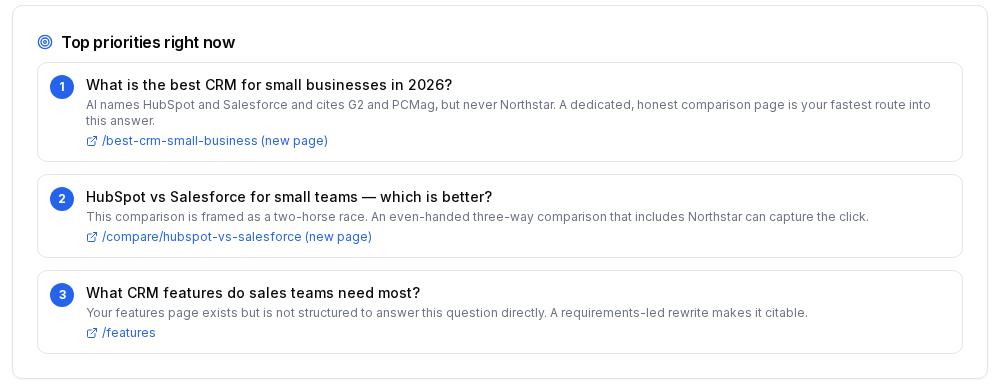
Each scan gives you a list of missed opportunities, showing the buyer question, the platform, and the exact competitor page being cited. This is not a generic keyword list or a theoretical gap—it’s a record of what AI assistants are actually saying to buyers right now.
You can see a public example of this output in the SEOWedge sample report. For a step-by-step on how SEOWedge finds buyer questions, see this guide.
What Are the Steps to Get My Brand Cited?
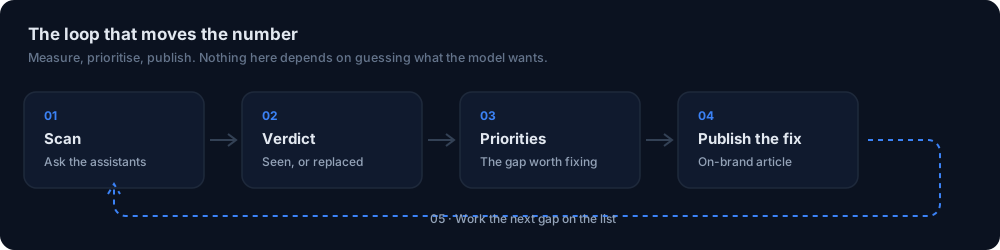
1. Check crawlability: Make sure OAI-SearchBot (for ChatGPT) and Googlebot (for Gemini and Google AI Overviews) are allowed in your robots.txt. If you’re unsure, see the OpenAI crawler documentation and LLM SEO guide.
2. Run a scan: Use SEOWedge to scan your site and discover which buyer questions cost you citations, which competitors are named, and which pages drive those mentions.
3. Review Action Briefs: SEOWedge produces Action Briefs for each gap. Each brief tells you why your brand is skipped, which competitor page is being cited, and what type of page or content you need to create or fix.
4. Create answer-ready pages: Use SEOWedge’s Content Studio to generate the missing page, based on your Brand DNA profile. Edit and score it for publish readiness.
5. Publish and notify: Publish the new or revised page. SEOWedge submits the URL through IndexNow, so engines can re-crawl and update their answer set faster (IndexNow documentation).
6. Monitor for movement: AI assistants update their citations on a weekly or monthly cycle, not instantly. SEOWedge records the sampled answers and scores each scan, so you can see when your brand starts being named.
How Does SEOWedge Identify and Close Citation Gaps?
SEOWedge’s workflow is built for turning missed citations into concrete, actionable steps. After scanning your site and your market, it returns:
- An AI-Visibility score: How often your brand is named versus competitors, per platform.
- A competitor share-of-voice table: Which brands are cited, and for which buyer questions.
- A page-level opportunity list: The exact questions and competitor pages that cost you citations.
For each opportunity, SEOWedge produces an Action Brief. This brief explains why your brand is skipped, what the AI assistant is looking for, and which page to create or fix. The Content Studio writes that page from your Brand DNA, ensuring it’s on-brand and answer-ready. Paid plans allow you to queue several articles at once, so you can close multiple gaps in one workflow. For a detailed walkthrough, see how SEOWedge turns AI visibility gaps into actionable content.
Can SEOWedge Write the Pages That Win Citations?
Yes. SEOWedge’s Content Studio generates answer-ready pages directly from your Brand DNA profile. This means the content is specific to your products, market, and conversion goal—not generic filler. Each draft is scored for Publish Readiness, so you know it meets the structure and clarity AI assistants require to cite a page.
You can edit, revise, and export the content before publishing. Paid plans allow bulk generation, so you can address a whole list of missed citation opportunities in one pass. The workflow is designed for ecommerce and agency teams who need to move from gap discovery to published fix without switching tools or buying extra credits elsewhere.
If you want to see how SEOWedge keeps content on-brand, see the Brand DNA and content workflow guide. For the full workflow, see the AI search visibility tool overview.
What Makes SEOWedge Different From Other Tools?
SEOWedge is built for ecommerce brands and agencies who need to get cited in AI answers—not just track mentions. The workflow closes the loop: it measures which buyer questions cost you citations, names the competitor and page behind each gap, and writes the page that closes it, all in one place. There is a real free scan (no card), the lowest entry price in the category, and paid plans allow you to generate and revise answer-ready content in bulk.
Other tools may require you to write and maintain prompt lists, or buy separate credits for content generation. SEOWedge’s discovered buyer questions are not prompts you have to manage—they’re found automatically, per scan, from your site and market. For a head-to-head comparison with other tools, see the best AI search visibility tools guide.
What’s My Next Step If I Want to Get Cited in AI Answers?
Start with a free scan on SEOWedge—no card required. You’ll see which buyer questions cost you citations, which competitors are being named, and which pages you need to create or fix. The Action Briefs and Content Studio walk you through closing those gaps, so your brand can be cited in ChatGPT, Gemini, and other AI assistants.
If you want to see a real example before starting, check the public sample report. To learn more about the underlying concepts, visit the resources hub. If you’re ready to act, start your free scan now.
How this was tested
All claims and steps are based on SEOWedge’s workflow and output, as tested on 2026-08-12. Citations and mechanisms reflect the sampled answers from OpenAI (GPT) and Google Gemini, using the method described in SEOWedge’s product facts and method notes. Crawlability and citation requirements reference OpenAI and Google documentation as cited. Screenshots are chosen from the product interface, illustrating the workflow and outcomes described.
What this page does not cover
This page covers the practical, step-by-step process for ecommerce brands to get cited in AI answers using SEOWedge, focusing on ChatGPT, Gemini, and Copilot. It does not detail enterprise workflows, ongoing brand monitoring, or advanced technical LLM SEO, which are covered in the LLM SEO technical guide. All recommendations are based on the mechanisms of current AI assistants as of 2026-08-12; future changes to AI citation behavior or platform policies may require updated tactics. For Google AI Overviews specifics, see the Google AI Overviews optimization guide.
Questions buyers ask us
Why does ChatGPT or Gemini recommend my competitors instead of my brand?
AI assistants recommend brands whose pages directly answer buyer questions, are trusted, and are crawlable by their bots. If your competitor’s page is more answer-ready, or your site blocks OAI-SearchBot or Googlebot, you’ll be skipped. SEOWedge shows exactly which competitor and which page is being cited, so you know what to fix. For a deeper dive, see why ChatGPT recommends competitors.
What do I need to change on my product or category pages to get cited?
You need to create pages that directly answer high-intent buyer questions, using clear structure, specific details, and matching schema markup where appropriate. SEOWedge’s Action Briefs tell you exactly what’s missing, and the Content Studio generates a draft page ready for AI citation. For a checklist, see the AEO checklist for ecommerce.
Do I need special markup or llms.txt to get cited in AI answers?
No special markup or llms.txt file is required. Google states that original, first-hand content is what succeeds in AI experiences. What matters most is answer-ready content that matches the buyer’s question and is crawlable by the right bots. For technical details, see schema markup for AI search and the LLM SEO guide.
How quickly can I expect to see my brand cited after publishing a new page?
AI assistants update their citations on a weekly or monthly cycle, not instantly. After you publish a new answer-ready page and notify engines via IndexNow, it can take several weeks for the change to appear in sampled answers. SEOWedge stores each sampled answer and scores your visibility per scan, so you can see when your brand starts being cited.
Can I use SEOWedge for multiple brands or clients?
Yes. SEOWedge’s Pro and Agency plans support multiple projects (5 on Pro, 25 on Agency), with bulk scanning and article generation. Agencies can export white-label reports on the Agency plan. For details, see AI search reporting for agencies.
What does the free scan include, and do I need to enter a card?
The free scan includes a real AI-Visibility score, competitor share of voice, and one Action Brief with a draft article. No card is required. You see exactly which buyer question costs you citations and what to do about it. For more, see the free AI search audit overview.
See what AI assistants say about your site
Enter your domain and SEOWedge runs a free scan: your AI-Visibility score, the buyer questions where a competitor is named instead of you, and the first page to fix. No install, no sales call.