How Do I Use SEOWedge to Get My Brand Cited in AI-Powered Product Comparison Tables?
SEOWedge shows you exactly when your brand is missing from AI-powered product comparison tables, identifies the specific page or gap causing the omission, and generates or revises the content you need to win citations. The workflow covers discovery, diagnosis, and content creation—so your brand appears in the high-conversion tables buyers see in ChatGPT, Gemini, and Copilot answers.
By the SEOWedge Research Team · Published August 24, 2026 · Last tested August 24, 2026 · Updated August 24, 2026 · 6 min read
What to take away
- SEOWedge scans reveal if your brand is missing from AI-generated comparison tables.
- See the exact competitor pages being cited instead of yours, down to the URL.
- Get an Action Brief: the question, why you’re missing, and which page to fix or create.
- Generate a publish-ready, AI-citable comparison page from your Brand DNA profile.
- No credit card needed for a free scan—get a real, actionable result in minutes.
How Does SEOWedge Discover When My Brand Is Missing from AI Product Comparison Tables?
SEOWedge starts by crawling your site and extracting a Brand DNA profile—your category, products, and what makes your offer unique. It then discovers the real buyer questions asked in your category, including those that trigger product comparison tables in AI assistants like ChatGPT and Gemini. These are not generic prompts; they are high-intent, purchase-driven queries surfaced from your market and competitors.
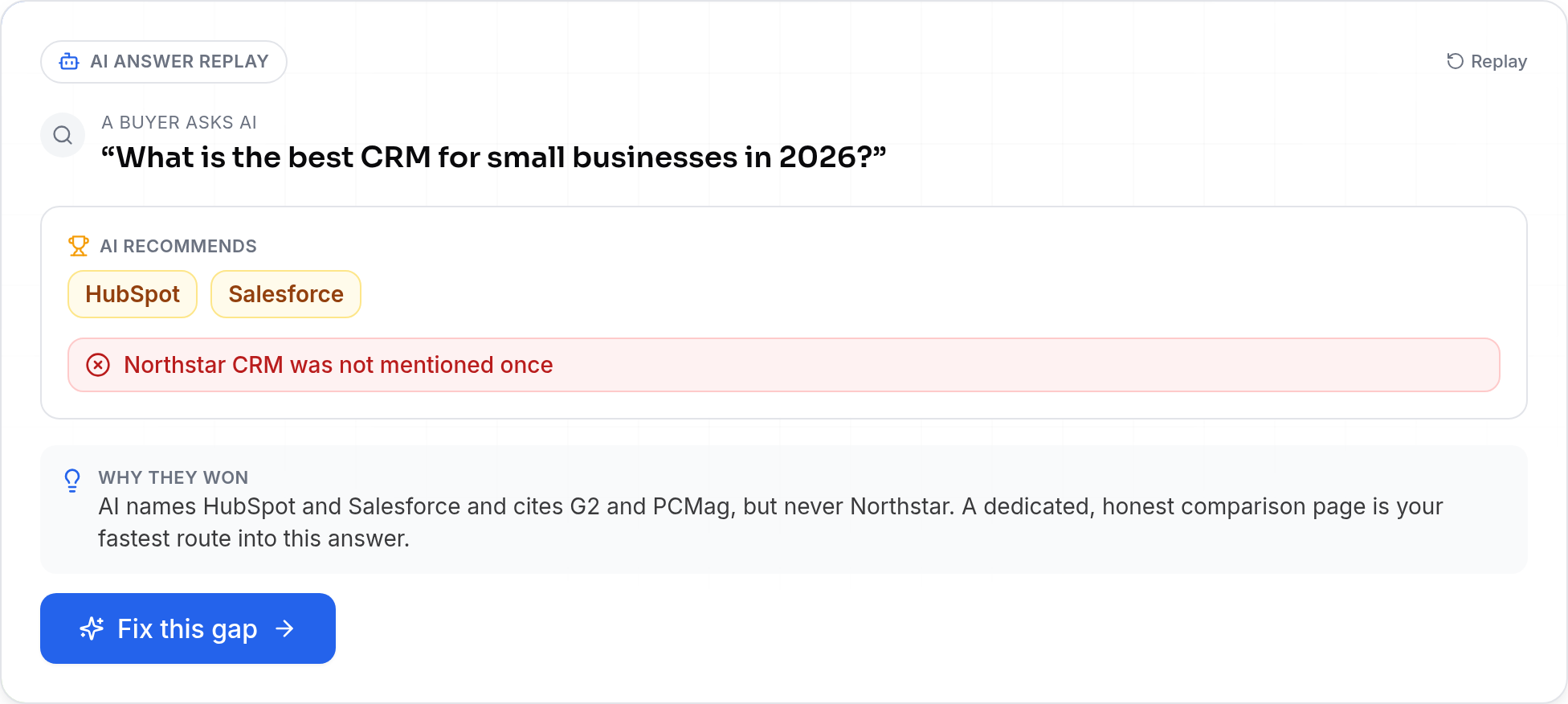
SEOWedge sends these questions to AI assistants using their APIs. It records which brands and sources are named or cited in the resulting comparison tables or grids. If your brand is missing, SEOWedge flags the omission and shows which competitor pages are being cited instead. This process is reproducible and platform-specific: OpenAI (GPT) on all plans, and Google Gemini on paid plans. The scan returns a dated, checkable sample of answers, so you see exactly what buyers see in AI-powered product comparisons.
What Steps Does SEOWedge Take to Pinpoint the Exact Page or Content Gap?
After identifying that your brand is missing from a product comparison table, SEOWedge drills down to the root cause. It does this by matching each buyer question to the AI answer, then extracting the exact competitor URLs cited for that query. This is not just a brand-level check—you see the specific page that won the citation in the AI table.
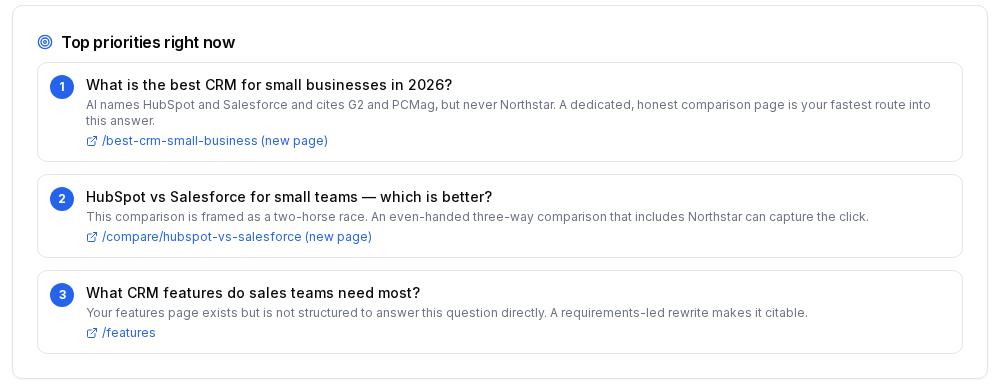
For every missed opportunity, SEOWedge generates an Action Brief. The brief tells you: the buyer question that triggered the table, which brands and URLs were cited, why your brand was left out, and which page or type of content you need to create or fix. This removes the guesswork and manual research from the process. You can see the full workflow for opportunity discovery and prioritization in the prioritization guide.
How Do I Use SEOWedge to Generate or Revise a Page That Wins Citations in AI Comparison Tables?
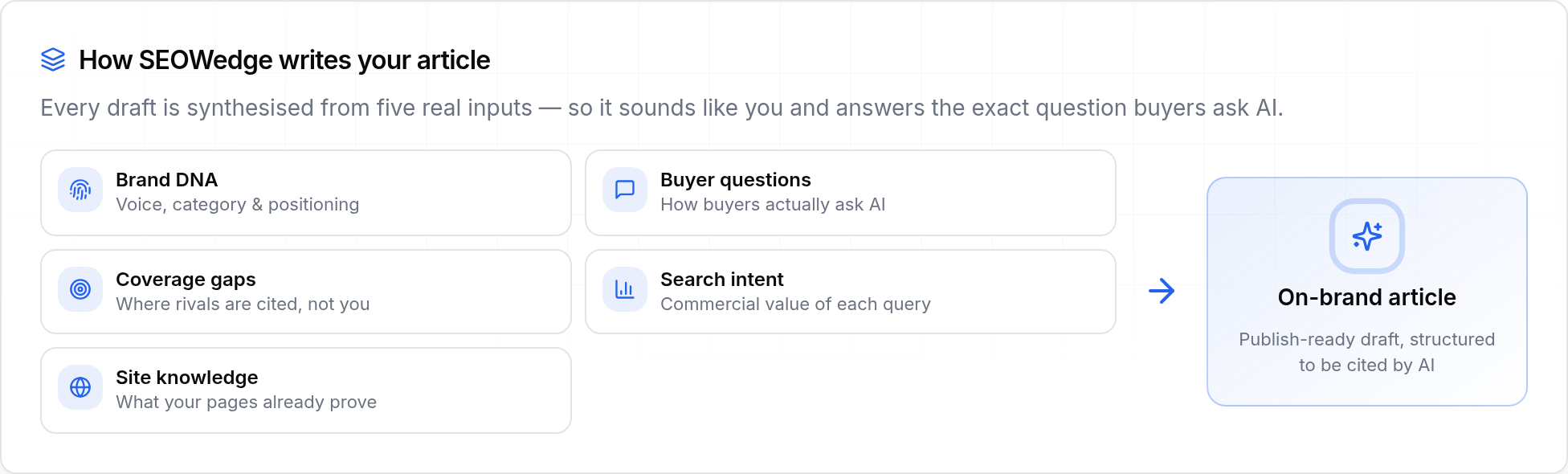
Once you have an Action Brief, SEOWedge’s Content Studio takes over. It uses your Brand DNA profile to generate a draft page or section that directly addresses the buyer question and is structured for citation in AI-powered comparison tables. The content is not generic—it’s shaped by your product details, positioning, and the specific requirements of AI answer engines.
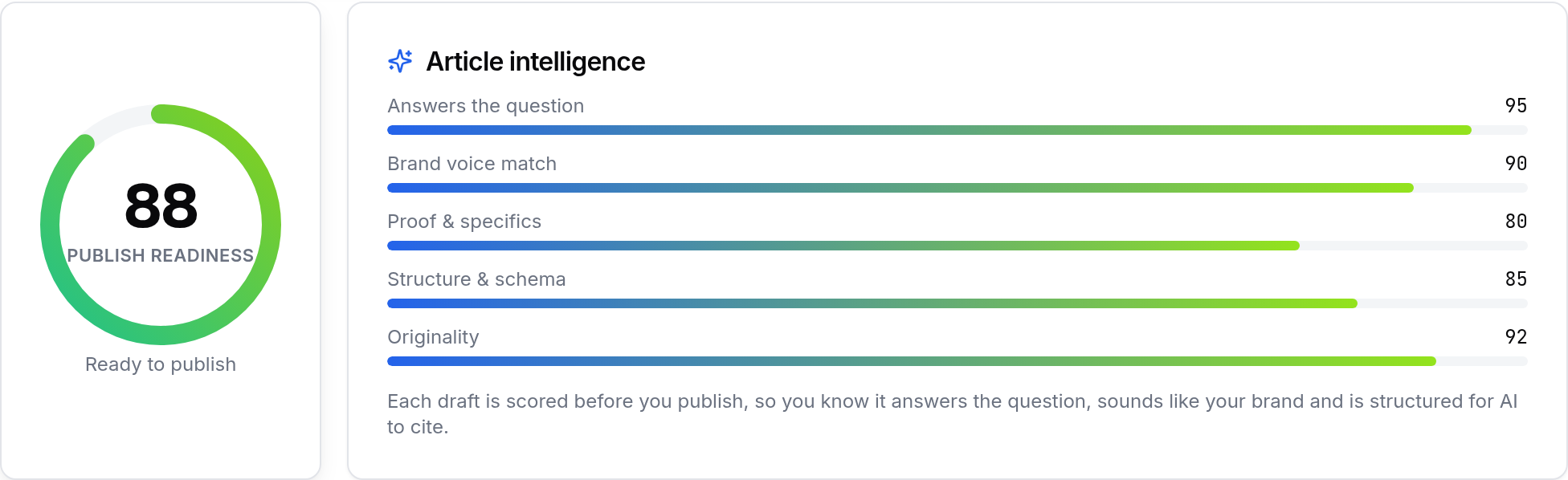
You can edit, refine, and score the draft for Publish Readiness inside SEOWedge. The platform provides a deterministic score based on answer engine optimization (AEO) and generative engine optimization (GEO) best practices. This includes direct-answer blocks, clear comparison features, and structured data recommendations. When the page is ready, you export and publish it on your site. Paid plans let you queue and generate multiple pages at once, so you can address several comparison table gaps in one workflow. For more on generating multiple pages efficiently, see bulk article generation.
What Does a Publish-Ready, AI-Citable Comparison Table Page Look Like in SEOWedge?
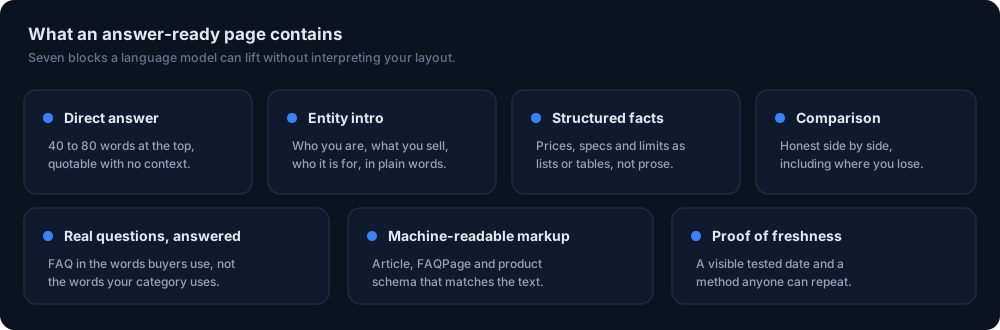
A page built for AI-powered product comparison tables must answer the high-intent buyer question clearly, present structured comparison data, and match the expectations of answer engines. SEOWedge guides you to include:
- A direct, question-reflective headline and summary answer.
- A comparison table or grid with the key features, specs, and differentiators buyers care about.
- Clear, first-hand product details—original content, not boilerplate or scraped specs.
- Structured data (Product, ItemList, or FAQPage schema) that matches the visible content, as recommended by Google for AI experiences (source).
- On-brand voice and conversion calls that align with your site’s goals.
SEOWedge’s Publish Readiness score checks for these elements before you export. This ensures the page is not just SEO-optimized, but AEO and GEO-ready for inclusion in AI comparison tables.
How Is SEOWedge’s Workflow Different from Classic SEO or Prompt Tracking?
Classic SEO tools track rankings and traffic but cannot see or influence how AI assistants build product comparison tables. Prompt-tracking tools require you to write and maintain your own question list, then monitor mentions or citations. SEOWedge discovers the buyer questions for you, tests them across multiple AI assistants, and returns the actual tables and citations buyers see. You do not need to write prompts or guess what matters—SEOWedge surfaces the real, high-conversion opportunities automatically.
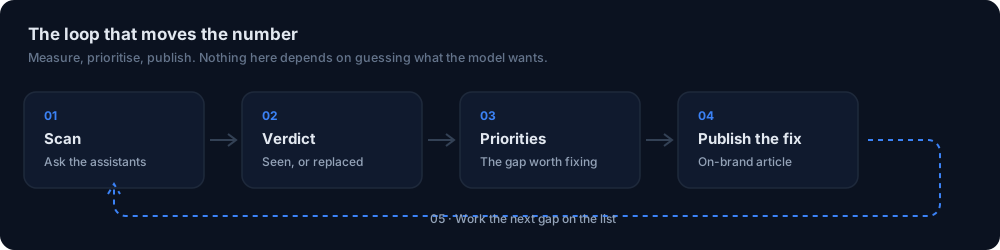
The workflow is a single loop: measure the gap, diagnose the cause, produce the fix, and score for readiness. This is not just a dashboard or a monitoring tool—it’s a full cycle from missed citation to publish-ready page. For a direct comparison with prompt-based or classic SEO tools, see what makes SEOWedge different.
How Fast Can I Go from Diagnosis to a Published, AI-Citable Comparison Page?
On the Free plan, you get an instant Lite Scan—no card required—that returns a real AI-Visibility score, competitor share of voice, and a single Action Brief with a page-level opportunity. You can generate and export one article, lifetime, to see the full workflow in action. Paid plans unlock more scans, more discovered questions (up to 25 per scan on Agency), and bulk generation of up to 10 articles at once. Every scan produces a prioritized list of opportunities, so you always know which comparison table gaps to tackle first.
The time from scan to publish-ready draft is typically under 30 minutes for a single page. Bulk workflows let you move from diagnosis to a set of exportable, AI-citable pages in a single session. For details on free vs paid plan limits, see plan limits explained.

What Happens After I Publish My New Comparison Table Page?
Once your new or revised page is live, SEOWedge recommends submitting the URL through IndexNow so participating engines and AI assistants are notified immediately (IndexNow documentation). AI assistants update their citations when they next crawl and reassemble answers, which usually takes weeks rather than hours. SEOWedge dates and stores every sampled answer, so you can compare before/after visibility the next time you run a scan.
The workflow is built around the reality of AI answer sampling: you measure, act, and then check if the citation has moved. This is different from classic SEO, where rankings update daily and are visible in analytics. For more on how AI answer sampling and citation movement work, see the AI Search Visibility Score guide.
Where Do I Go Next If I Want to Get My Brand Cited in AI Comparison Tables?
If you want to see your own comparison table gaps, start with a free scan—no card required—at SEOWedge signup. You will get a real, actionable opportunity and see the step-by-step workflow described above. For a deeper dive into comparison queries and how SEOWedge surfaces and closes those gaps, see the product comparison opportunities guide. If you want to see a real example before acting, review the public sample report.
How this was tested
All facts and workflow steps are based on the current SEOWedge product as tested on 2026-08-24. SEOWedge records a dated sample of AI answers from OpenAI (GPT) on all plans, and Google Gemini on paid plans, using buyer-reflective questions discovered from the scanned site and its category. The platform identifies which brands and URLs are cited in product comparison tables, then produces Action Briefs and content drafts based on those findings. No claims are made about other tools or platforms unless directly cited from their published documentation or as a result of tested, checkable SEOWedge output.
What this page does not cover
This page addresses how SEOWedge surfaces and closes gaps in AI-powered product comparison tables for ecommerce brands and agencies. It does not cover manual prompt tracking, classic SEO ranking, or general AI content writing workflows. For broader GEO/AEO/LLM SEO strategy, see the GEO guide. For a focus on buying guides, gift guides, or niche queries, see the relevant linked resources. All data and workflow steps are current as of 2026-08-24 and reflect SEOWedge’s capabilities at that time.
Questions buyers ask us
How does SEOWedge know which comparison tables matter for my category?
SEOWedge discovers high-intent buyer questions by crawling your site and analyzing your category, products, and competitors. It surfaces the real queries buyers use to trigger product comparison tables in AI assistants, rather than relying on generic prompts or keywords.
Can I see which competitor pages are being cited instead of mine?
Yes. SEOWedge shows not just the brand but the exact URL that is cited in the AI-powered comparison table for each buyer question. This lets you see what type of content or structure wins citations and where your gap is.
Do I have to write or maintain my own question list?
No. SEOWedge automatically discovers the buyer questions that matter for your category and market with each scan. You do not need to supply prompts or keep a list updated—this is handled by the platform.
What makes a page 'publish-ready' for AI comparison tables?
A publish-ready page answers the buyer’s question directly, includes a structured comparison table or grid, uses original product details, and matches AEO/GEO requirements. SEOWedge scores each draft for these elements before you export.
How long does it take for AI assistants to update their citations after I publish a new page?
AI assistants update their citations when they next crawl and reassemble answers, which typically takes weeks. SEOWedge stores a dated sample of answers so you can check for changes after publishing. For faster discovery, submit your new page via IndexNow.
What do I get for free, and when should I upgrade?
The free plan includes one Lite Scan, one Action Brief, and one article export. This is enough to see your first real opportunity and test the workflow. Paid plans unlock more scans, more discovered questions, bulk article generation, and Google Gemini coverage. See the plan limits guide for details.
See what AI assistants say about your site
Enter your domain and SEOWedge runs a free scan: your AI-Visibility score, the buyer questions where a competitor is named instead of you, and the first page to fix. No install, no sales call.