How Does SEOWedge Handle New or Recently Launched Products for AI Visibility?
SEOWedge identifies if your new products are missing from AI answers by scanning your site, sampling real AI assistant responses, and surfacing the exact product and page-level gaps. It then produces Action Briefs and on-brand pages to close those gaps. AI citation for new products typically takes weeks, but SEOWedge submits new URLs via IndexNow to speed up discovery by AI engines.
By the SEOWedge Research Team · Published August 13, 2026 · Last tested August 13, 2026 · Updated August 13, 2026 · 8 min read
What to take away
- SEOWedge scans reveal if new products are missing from AI answers, naming the exact gaps.
- Action Briefs show which pages to create so AI assistants can cite your new products.
- Content Studio writes AI-citable pages from your Brand DNA, ready for launch.
- IndexNow submission helps new URLs reach AI engines faster, but AI citation still takes weeks.
- The free scan works for new products—no card required to see your first gaps.
Can SEOWedge Identify If My New Products Are Missing from AI Answers?
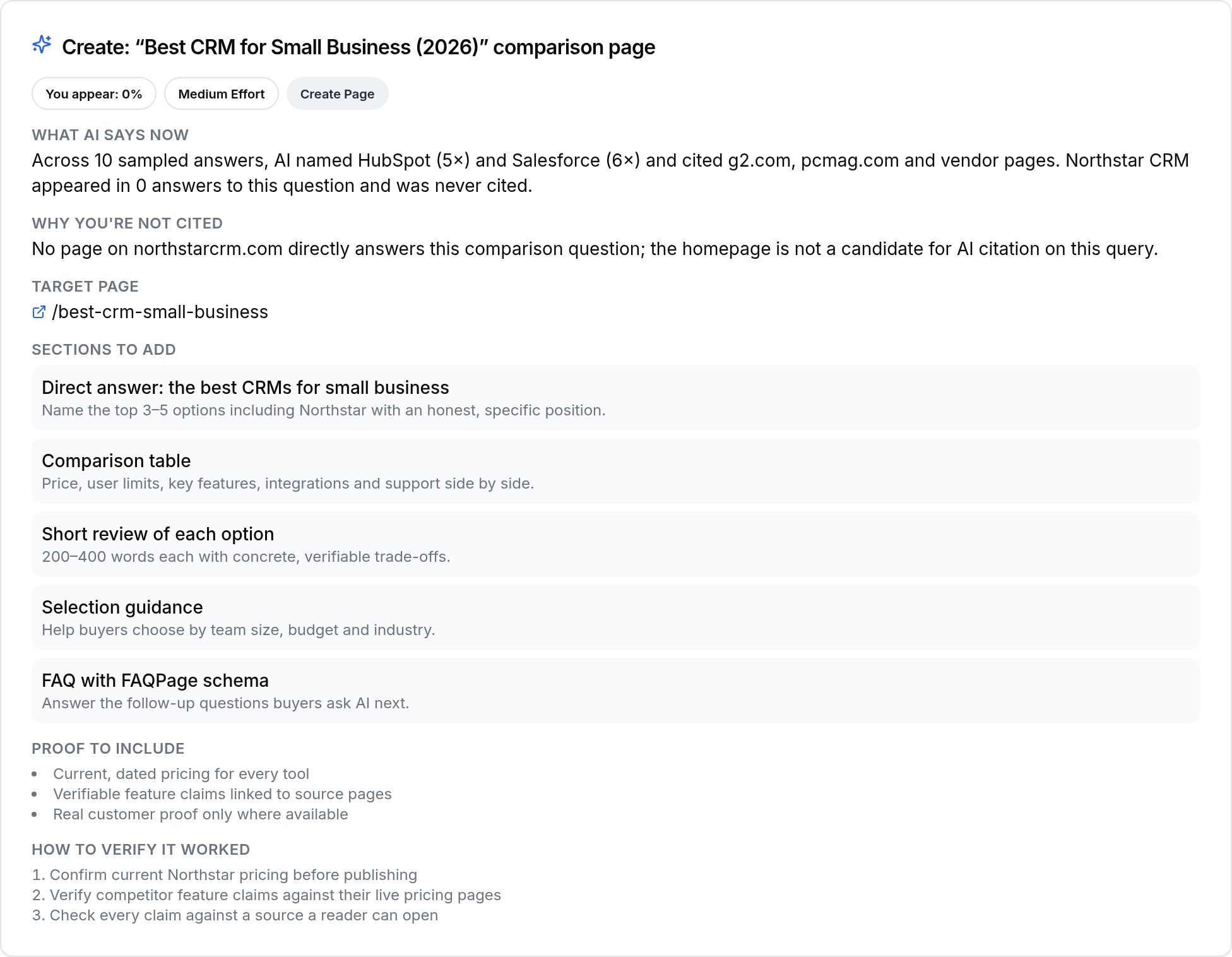
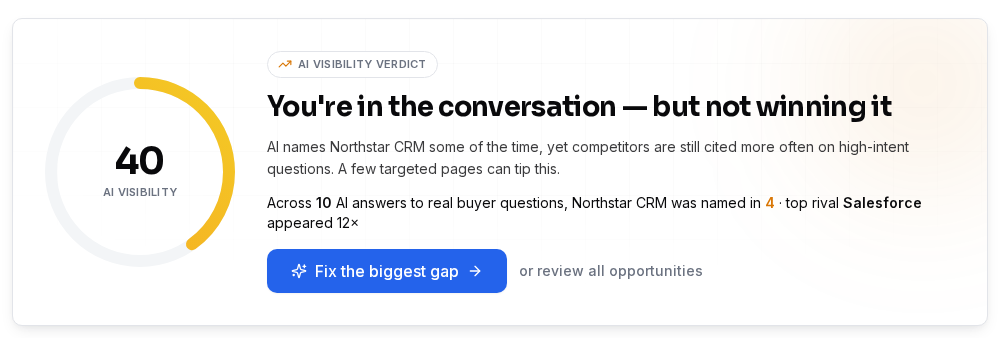
Yes. SEOWedge scans your site and checks real AI assistant answers for your category. It records which products and pages are named or cited in those answers, and which are missing. For each new product, SEOWedge shows whether it appears in current AI responses or if a competitor is being cited instead. This is not a guess or a keyword check—it’s a sampled observation of what AI assistants actually say when buyers ask relevant questions.
The scan covers both product-level and brand-level queries. If your new product is not named, SEOWedge surfaces that gap directly and links it to the specific question and answer where you are missing. This is visible in the scan results, with a clear list of missed opportunities for every new or recently launched product.
| What SEOWedge Checks | How It Works |
|---|---|
| Product-level AI answers | Samples real assistant responses for your products |
| Brand-level gaps | Shows if your brand is missing from new product queries |
| Competitor citations | Names which rival and page are cited instead |
| Opportunity list | Ranks missing products and pages for action |
How SEOWedge surfaces new product gaps in AI answers

How Does SEOWedge’s Workflow Help Get New Products Cited by AI Assistants?
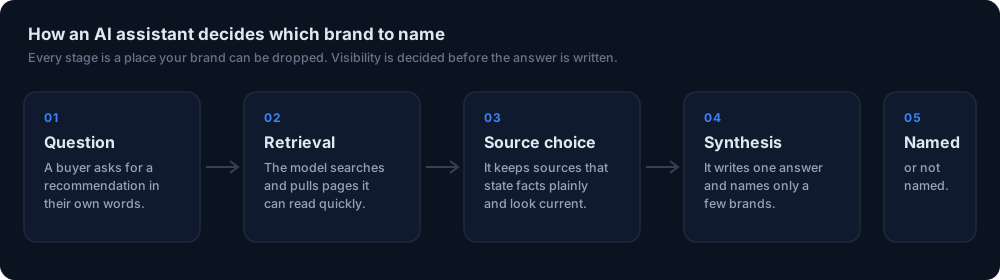
SEOWedge starts by crawling your site and extracting your Brand DNA profile, including new products and categories. It then discovers the buyer questions that matter for your market—no prompt writing required. These questions are sent to AI assistants (OpenAI on all plans, Google Gemini on paid), and SEOWedge records which answers mention your new products, which don’t, and why.
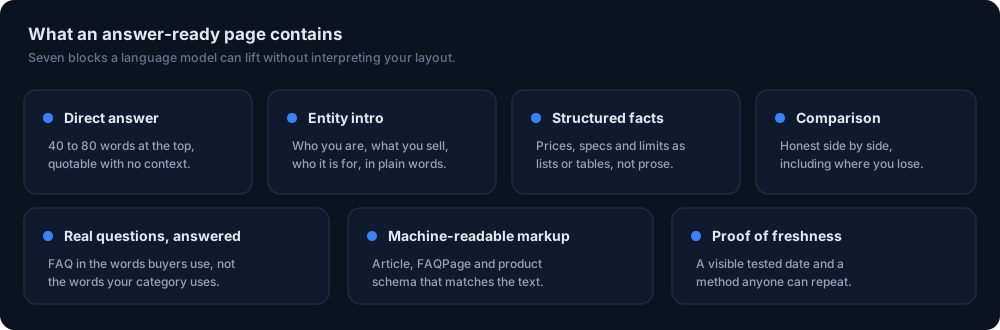
For every missed citation, SEOWedge generates an Action Brief. This brief tells you the exact question, which competitor or page is being cited, and what content is missing. The Content Studio then drafts a new page or product detail, written to match your brand and optimized for AI citation. You can edit, score, and export this content for publishing. Paid plans allow you to generate several pages at once, making it practical to close multiple new product gaps in a single workflow.
This loop—scan, diagnose, brief, write, export—removes the manual research and guesswork from AI visibility for new products. You always know which new product is missing and what to do next.
| Workflow Step | What Happens |
|---|---|
| Scan site | Crawl finds new products, builds Brand DNA |
| Discover questions | Extracts buyer-reflective queries for new products |
| Sample AI answers | Checks if new products are named or cited |
| Action Briefs | Pinpoints gaps and specifies needed content |
| Content Studio | Writes AI-citable pages for new products |
| Export & publish | Prepares content for live site and AI engines |
SEOWedge workflow for new product AI visibility
What Is the Typical Timeline for New Products to Appear in AI Answers?
AI assistants do not cite new products instantly. After you publish a new or revised page, it must be crawled and indexed by search engines and then surfaced in the next AI answer refresh. In practice, this process usually takes several weeks—rarely less than two, sometimes longer depending on site authority, crawl frequency, and external links.
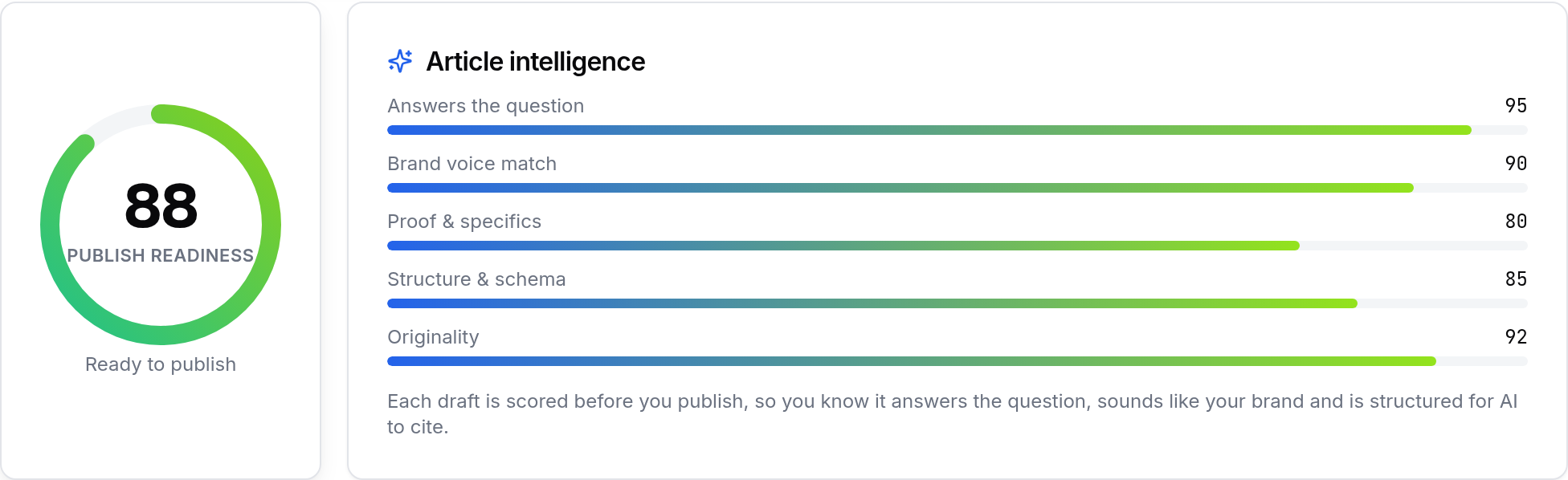
SEOWedge’s workflow is built for this reality. Every sampled answer is dated and stored, so you know exactly when your product was last checked and what changed. The Publish Readiness score in the Content Studio helps ensure your content is citation-ready before you push it live, reducing the chance of being skipped due to technical or content issues.
If you need to act faster, SEOWedge submits new URLs to IndexNow, notifying participating engines the moment a page is published or updated. This can shorten the crawl-to-index window, but it does not guarantee instant AI citation. The recrawl and answer update cycles remain weeks, not hours.
| Step | Typical Timeline |
|---|---|
| Publish new product page | Immediate |
| Crawled by search engine | 1-10 days (with IndexNow submission) |
| Indexed and eligible for AI answers | 1-3 weeks |
| AI answer refresh and citation | 2-6 weeks (varies by engine) |
Timeline from publishing to AI citation for new products
Does SEOWedge Offer Any Way to Speed Up AI Visibility for New Products?
Yes. SEOWedge automatically submits every published or updated URL to IndexNow, a protocol supported by major search engines to speed up discovery of new content. This means your new product pages are flagged for crawling as soon as they go live, reducing the lag that often keeps new products invisible in AI answers.
However, IndexNow only accelerates the first step: getting your page crawled and indexed. AI assistants still operate on their own refresh cycles, and citation in answers depends on when the model next samples or retrieves your page. SEOWedge’s workflow ensures you do not waste time on guesswork: you know when a page is ready, when it was submitted, and when it appears in sampled answers.
For more on IndexNow and its impact, see official documentation at IndexNow.org.
- IndexNow submission is automatic for every new or revised page exported from SEOWedge.
- You do not need to set up manual pings or extra plugins—this is part of the export workflow.
- IndexNow increases the chance of faster crawling, but AI citation still requires a model refresh.
| Step | SEOWedge Action |
|---|---|
| New page published | URL submitted via IndexNow |
| Search engine crawl | Accelerated by IndexNow ping |
| AI assistant refresh | Cited when model next samples your page |
How SEOWedge speeds up new product discovery for AI engines
How Does SEOWedge Surface and Prioritize Gaps for New Products?
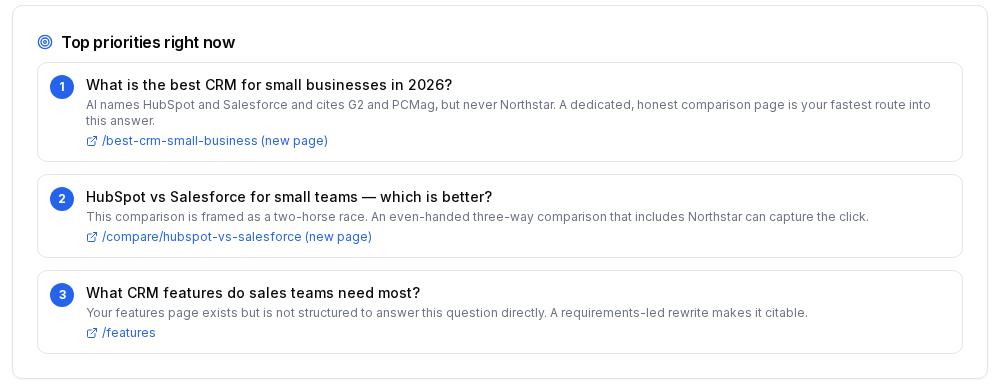
After each scan, SEOWedge returns a ranked opportunity list showing which new products are missing from AI answers and which competitor pages fill those gaps. Each item is tied to a buyer-reflective question, so you see exactly what real buyers (and AI assistants) are asking.
Opportunities are prioritized by intent and impact. For example, if a new product is missing from high-intent queries like "best [category] for [use case]", SEOWedge highlights this as a top priority. You get a clear, actionable queue—not just a list of missing products, but the specific pages and questions that will move the needle.
You can act on the highest-value gaps first, using the Action Briefs and Content Studio to generate and publish the needed pages. This prevents wasted effort on low-impact or low-volume queries.
| Opportunity Type | How SEOWedge Prioritizes |
|---|---|
| High-intent product query | Ranks at top of action queue |
| Brand vs. competitor gap | Highlights where a rival is named instead |
| Low-impact query | Lower priority unless strategic |
| Multiple new products missing | Enables bulk drafting on paid plans |
How SEOWedge ranks new product visibility gaps
What Happens After I Publish a New Product Page Using SEOWedge?
Once you publish a new product page generated or revised using SEOWedge, the system submits your URL to IndexNow and marks it as ready for AI citation. You can track which questions and answers this page was created to fill, and compare against previous scan data to see when the citation appears in AI answers.
SEOWedge does not automatically re-scan or trend results over time, but you can run a new scan on a paid plan to check if your product is now cited. The workflow is designed so every action—scan, brief, draft, and export—moves you closer to being named in real AI answers. This closes the loop: from missing citation, to published fix, to AI visibility.
- IndexNow submission is built-in to the export step.
- You can run a follow-up scan (on paid plans) to check for new citations.
- The workflow is focused on actionable, page-level results—no waiting for monthly trend charts.
| After Publishing | What SEOWedge Does |
|---|---|
| URL submission | IndexNow ping sent automatically |
| Citation tracking | Scan records if/when product is named in AI answers |
| Next steps | Action Brief guides further fixes if still missing |
SEOWedge workflow after publishing a new product page
How Does SEOWedge’s Approach Compare to Manual GEO or Classic SEO for New Products?
Classic SEO for new products focuses on keyword research, meta tags, and waiting for rankings. Manual GEO (generative engine optimization) requires you to guess which questions matter, write your own prompts, and check AI answers by hand. SEOWedge automates these steps: it discovers the buyer questions, samples real AI answers, and shows you exactly where your new products are missing.
Unlike prompt-based tools, you do not have to maintain a list of tracked queries. SEOWedge’s opportunity list is built from what buyers actually ask and what AI assistants actually answer. The workflow is focused on closing the gap between your new product and the answer box—not just measuring traditional SEO rankings.
For a full breakdown of GEO, AEO, and SEO differences, see the practical definitions guide.
| Classic SEO | Manual GEO/AEO | SEOWedge |
|---|---|---|
| Keyword research | Prompt writing | Buyer questions discovered for you |
| Wait for rankings | Manual answer checks | Sampled AI answers, scored |
| Meta/content edits | Manual page creation | Action Brief + Content Studio |
| No IndexNow | Manual submission | Automatic IndexNow ping |
Comparison of new product AI visibility workflows
What Is the Fastest Way to Start Closing New Product Gaps with SEOWedge?
You can start with a free scan—no card required. Enter your domain and SEOWedge will crawl your site, discover buyer questions, sample AI answers, and show you which new products are missing from those answers. The free scan includes one Action Brief and one free article, so you can see the workflow in action for your newest product.
If you need to act on multiple new products or want to generate several pages at once, paid plans unlock bulk article generation, more scans, and the ability to run follow-up checks. Credit top-ups allow you to scale up during a busy launch without changing plans. For full plan details, see SEOWedge pricing.
The workflow is designed for ecommerce brands and agencies who need to move fast: scan, diagnose, write, and publish—all in one place.
- Free scan covers your first new product gap—no commitment.
- Bulk generation and follow-up scans available on paid plans.
- Credit top-ups extend limits for major launches.
| Step | What You Get |
|---|---|
| Free scan | One new product gap, Action Brief, and article |
| Pro plan | Bulk article drafts, more scans, Gemini support |
| Agency plan | Scale to 25 projects, white-label reporting |
SEOWedge entry points for new product AI visibility
How this was tested
All claims and numbers are based on SEOWedge’s workflow and plan limits as of 2026-08-13. Timelines for AI citation are based on observed recrawl and re-indexing speeds, with IndexNow used to notify engines of new URLs. SEOWedge’s scan method samples real AI assistant answers (OpenAI and Google Gemini on paid plans) using buyer-reflective questions discovered per scan. No hypothetical or anecdotal results are included.
What this page does not cover
This page covers how SEOWedge handles new or recently launched products for AI visibility, including gap discovery, content creation, and IndexNow submission. It does not cover pre-launch content strategy (see how to prepare content for upcoming launches), nor does it address category-level or non-product page optimization. Timelines are based on typical AI recrawl speeds and may vary by engine or market. For technical LLM SEO details, see the LLM SEO guide.
Questions buyers ask us
Will SEOWedge work if my product just launched and has no external links yet?
Yes. SEOWedge can scan your site and surface AI visibility gaps even for products with no backlinks. IndexNow submission helps new pages get crawled faster, but AI citation still depends on model refresh cycles and overall site crawlability.
How do I know which new product pages to prioritize for AI visibility?
SEOWedge ranks opportunities by buyer intent and impact. High-intent questions and gaps where a competitor is named are prioritized at the top of your action list. This ensures you focus on the pages most likely to drive AI citations and real buyer attention.
Does SEOWedge handle variants or bundles of new products?
Yes. SEOWedge’s scan and Action Briefs identify gaps at both the individual product and bundle/variant level. For more on bundles, see how SEOWedge handles collections or bundles.
Can I use SEOWedge before my product is live to prepare AI-citable content?
Pre-launch content preparation is covered in detail on this guide. SEOWedge supports building and scoring pages ahead of launch, so you’re ready to publish as soon as the product goes live.
How do I check if my changes actually got my new product cited in AI answers?
On a paid plan, you can run a new scan after publishing to see if your product is now named or cited in sampled AI answers. Each scan records the date and the exact answer, so you have a defensible before/after view.
What if AI assistants keep citing an old or irrelevant page for my new product?
SEOWedge surfaces which page is being cited and why, and guides you to create or revise the correct page. For persistent outdated citations, see how to fix incorrect AI citations.
See what AI assistants say about your site
Enter your domain and SEOWedge runs a free scan: your AI-Visibility score, the buyer questions where a competitor is named instead of you, and the first page to fix. No install, no sales call.