How Can I Use SEOWedge to Optimize for Featured Snippets and AI Answers Together?
SEOWedge helps you target both featured snippets and AI answer boxes by discovering the real buyer questions that trigger both, showing which competitors win each, and producing pages structured for both classic SEO and answer engine optimization. The workflow identifies overlapping opportunities and writes answer-ready content aligned with both Google’s featured snippet logic and AI assistant citation patterns.
By the SEOWedge Research Team · Published August 13, 2026 · Last tested August 13, 2026 · Updated August 13, 2026 · 6 min read
What to take away
- SEOWedge discovers buyer questions that trigger both featured snippets and AI answers, so you don’t have to guess.
- It shows which competitors win each answer type and which of your pages are missing or underperforming.
- Action Briefs explain why your page isn’t cited and what to fix for both snippet and AI answer eligibility.
- The Content Studio writes and scores pages for both SEO and AEO readiness, using your brand profile.
- You can start with a free scan, no card required, to see your own overlap and gaps.
Can SEOWedge Help Me Target Both Featured Snippets and AI Answer Boxes?
Yes. SEOWedge is built to discover the buyer questions that trigger both featured snippets (classic SEO) and AI answer boxes (AEO/GEO). When you run a scan, it identifies which questions are answered by featured snippets in Google and which are answered by AI assistants like ChatGPT and Gemini. It then shows which brands and pages are cited for each, so you see exactly where your content is missing or underperforming.
This dual mapping means you don’t have to guess which questions matter for both surfaces. SEOWedge’s Action Briefs explain why your page is not being cited and what to change to win both the snippet and the AI answer. The workflow is designed to bridge the gap between classic SEO and modern answer engine optimization, so you can act on both fronts from a single opportunity list.
How Does the Workflow Differ for Classic Snippets Versus AI-Driven Answers?
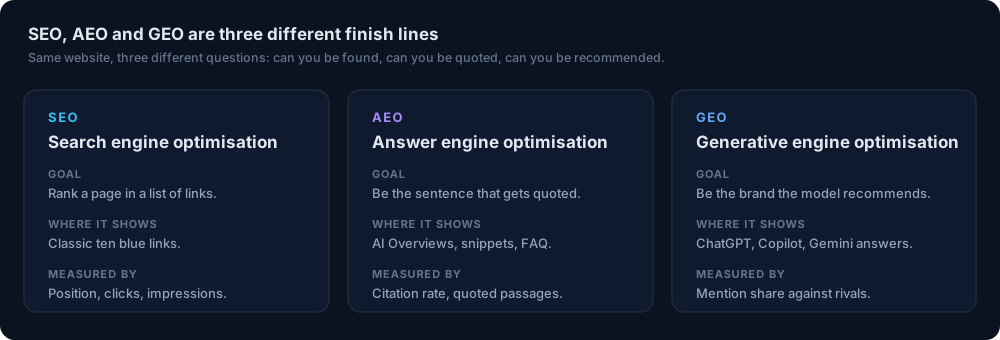
Optimizing for featured snippets (classic SEO) means structuring your page to answer a specific question in a concise, direct format—often a paragraph, list, or table near the top of the page, with schema markup supporting eligibility. For AI-driven answers (AEO/GEO), the requirements expand: your page must not only answer the question directly, but also be discoverable and quotable by large language models (LLMs) like GPT and Gemini.
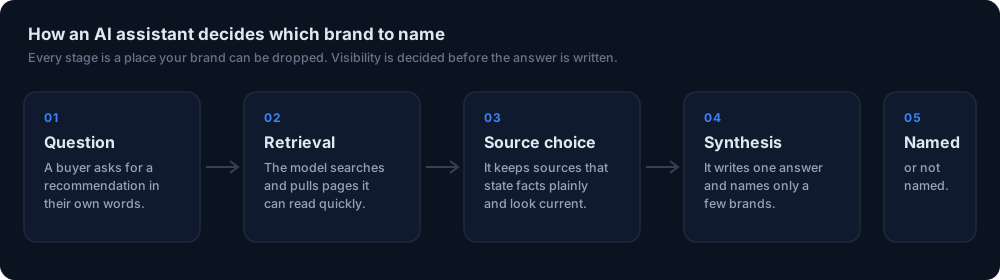
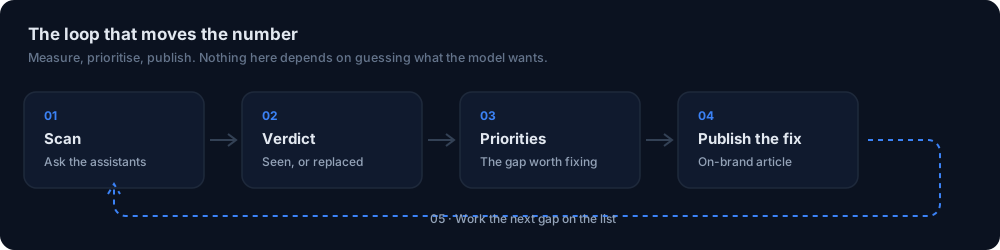
SEOWedge’s workflow starts by discovering the real buyer questions that matter for both types. It then samples what Google and AI assistants actually say for each, recording which brands and URLs are cited. Action Briefs spell out the gap: is your page not structured for a snippet, or is it missing the context LLMs need to cite it? The Content Studio produces a draft that meets both requirements—answer-first structure for SEO and retrieval-friendly content for AI answers.
Unlike classic SEO tools, SEOWedge does not rely on keyword rankings alone. It measures answer presence and citation, then turns those findings into page-level recommendations. You see, for each opportunity, whether it is a snippet, an AI answer, or both—and what to do about it.
What Page Elements or Structures Work for Both Featured Snippets and AI Answers?
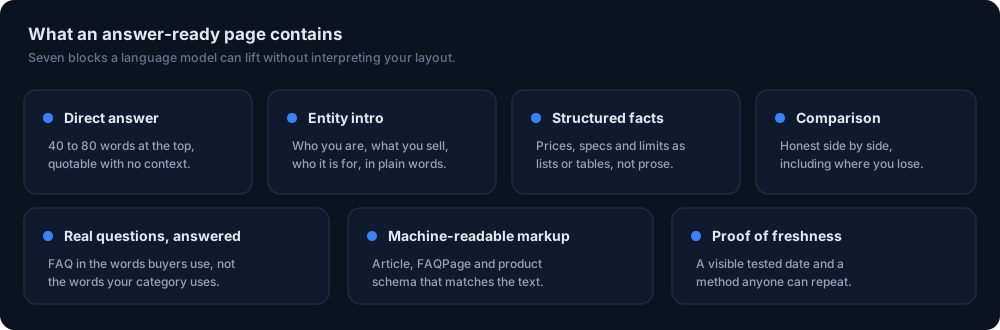
Pages that win both featured snippets and AI answer boxes share several traits: a clear, direct answer to the buyer’s question near the top; structured data that matches visible text; and content that is original, specific, and easy to quote. SEOWedge’s Content Studio builds these elements in by default, using your Brand DNA profile to keep answers on-brand and specific.
Key elements include:
- Answer-first paragraphs that restate the question and deliver a direct, quotable response.
- Lists or tables for comparison or step-by-step queries, which can be lifted by both Google and AI models.
- Schema markup (FAQPage, Product, HowTo) matching the visible answer, but never contradicting the main text.
- Contextual cues: unique details, prices, availability, and brand-specific facts that LLMs can cite as original content.
SEOWedge scores each draft for "Publish Readiness"—a deterministic measure of whether the page meets structure and content requirements for both snippet and AI answer eligibility. This removes the guesswork from page creation.
How Does SEOWedge Show Which Questions Overlap Between SEO and AI Answers?
SEOWedge’s scan returns a list of buyer questions discovered from your site and its category. For each question, it records whether a featured snippet exists in Google, whether an AI answer names your brand, and which competitor is cited if not. This lets you see at a glance which opportunities are shared between classic SEO and AI-driven results.
The opportunity list in your scan output flags questions that trigger both a snippet and an AI answer. For these, the Action Brief explains what is working (or missing) for each surface. You can sort or filter the list to focus on high-value overlaps—where one page update could win visibility in both places.
This overlap mapping is unique to SEOWedge’s workflow. You do not have to maintain separate lists or guess which questions matter for each channel. The scan and Action Briefs keep your optimization plan unified.
What Does the SEOWedge Action Brief Tell Me to Fix for Both?
For each overlapping opportunity, the Action Brief explains:
- Whether your page is missing, under-structured, or not cited by AI assistants.
- Which competitor is currently cited and why (e.g., clearer answer, better markup, more specific product detail).
- The on-page structure or content change needed to win both the snippet and the AI answer.
- Which schema (if any) supports eligibility, and whether your markup matches visible text.
- How to phrase and position the answer for both Google’s snippet extraction and LLM retrieval.
The Action Brief is not generic advice. It is generated from sampled answers and the Brand DNA profile, so the recommendation is specific to your site, your products, and your market. This makes it actionable for both SEO and AEO/GEO.
How Does SEOWedge’s Content Studio Write Pages for Both SEO and AI Answer Optimization?
After you select an opportunity, SEOWedge’s Content Studio drafts a new or revised page using your Brand DNA profile. The draft is structured to satisfy both featured snippet and AI answer requirements:
- The page opens with a direct, answer-first paragraph, echoing the buyer question.
- Supporting sections expand on the answer, using lists, tables, and unique brand details.
- Schema markup is suggested to match the answer block, ensuring snippet eligibility.
- The draft is scored for Publish Readiness, so you know before publishing if it meets both sets of criteria.
You can review, edit, and export the draft. Paid plans allow you to queue several articles at once, scaling the process across multiple gaps. This workflow is designed for ecommerce and agencies who need to act on many opportunities quickly, without sacrificing on-page quality or brand alignment.
How Does SEOWedge Remove Manual Work from Dual Optimization?
SEOWedge automates the steps that usually require separate tools or hours of manual research:
- It discovers the buyer questions that matter for both featured snippets and AI answers, so you do not have to build or maintain prompt lists.
- It samples and records which brand and page is cited for each answer type, so you see the real-world outcome, not just rankings or keyword matches.
- Action Briefs and the Content Studio turn each gap into a ready-to-publish page, scored for both SEO and AEO/GEO requirements.
- The workflow is built for ecommerce and agency teams managing multiple products or clients, with bulk generation on paid plans and a free scan to start.
For a detailed breakdown of how SEOWedge turns measurement into action, see How SEOWedge Turns AI Visibility Gaps Into Actionable Content. For classic AEO structure, see AEO Checklist for Ecommerce.
What Is My Next Step If I Want to See My Own Overlap and Fix Gaps?
Start with a free SEOWedge scan. Enter your domain—no card required—and you’ll receive a snapshot showing which buyer questions trigger both featured snippets and AI answers, which competitors are cited, and what you need to fix. The scan includes one Action Brief and a free article draft, so you can see the workflow before committing to a paid plan.
If you need to act on more than one opportunity, paid plans start at $29/month and allow bulk scans, multiple Action Briefs, and queued article generation. You can see a public sample report at Sample Report or go deeper on pricing at Pricing. For the workflow from scan to published fix, see How SEOWedge Turns AI Visibility Gaps Into Actionable Content.
How this was tested
All workflow and measurement details are based on SEOWedge’s current production system as of 2026-08-13. Overlap between featured snippet and AI answer opportunities is determined by comparing the discovered buyer questions (from SEOWedge’s scan) to both classic featured snippet triggers and sampled AI assistant answers (OpenAI and Gemini). Screenshots and diagrams reflect the SEOWedge interface and process as tested on this date.
What this page does not cover
This page covers how SEOWedge supports optimization for both featured snippets and AI answer boxes, focusing on ecommerce and agency use cases. It does not cover technical SEO outside on-page and schema, nor does it provide a universal featured snippet checklist—see AEO Checklist for Ecommerce for that. For a deep dive into Google AI Overviews, see How to Appear in Google AI Overviews and AI Mode. All findings are based on SEOWedge’s workflow and measurement method, not on third-party tools.
Questions buyers ask us
Does SEOWedge show me which of my pages are eligible for both featured snippets and AI answers?
Yes. SEOWedge’s scan output flags buyer questions that trigger both a featured snippet and an AI answer, and shows which of your pages (if any) are cited in each. The Action Brief details what to fix for dual eligibility.
How does SEOWedge decide which questions matter for both SEO and AI answers?
SEOWedge discovers high-intent buyer questions from your site and market, then tests each against Google and AI assistants. Overlaps are flagged where the same question triggers both a snippet and an AI answer, so you can focus on high-impact opportunities.
Can I use SEOWedge’s workflow if I only care about classic SEO or only about AI answers?
Yes. SEOWedge shows which opportunities are unique to featured snippets, unique to AI answers, or shared between both. You can filter and act on whichever set matches your goal, but most ecommerce brands benefit by targeting the overlap.
What if my competitors are winning the snippet but I’m winning the AI answer, or vice versa?
SEOWedge shows you both outcomes side by side. The Action Brief explains why each competitor is cited and what your page needs to do to win both. This lets you prioritize fixes based on the highest-value gap.
Is schema markup required to win AI answers as well as featured snippets?
Schema markup helps with featured snippet eligibility but is not required for AI answers. SEOWedge recommends schema where it supports the answer, but the primary factor for AI assistants is clear, original, answer-first content. See Structured Data for AI Search for details.
How do I know if my changes worked for both snippet and AI answer visibility?
After publishing, you can run another SEOWedge scan to see if your page is now cited in both answer types. The platform records sampled answers by date and platform, so you get a reproducible before-and-after snapshot.
See what AI assistants say about your site
Enter your domain and SEOWedge runs a free scan: your AI-Visibility score, the buyer questions where a competitor is named instead of you, and the first page to fix. No install, no sales call.