
How Can I Use SEOWedge to Close Content Gaps for Product Lifecycle or End-of-Life Questions?
SEOWedge identifies which buyer questions about discontinued or end-of-life products your site is missing, shows which AI answers cite outdated or third-party pages, and generates authoritative, brand-specific content to fill those gaps. After publishing, SEOWedge supports surfacing your updates in AI answers by structuring them for citation and submitting them to IndexNow, accelerating discovery by AI assistants.
By the SEOWedge Research Team · Published August 28, 2026 · Last tested August 28, 2026 · Updated August 28, 2026 · 8 min read
What to take away
- SEOWedge discovers real buyer questions about discontinued or end-of-life products—no prompt writing needed.
- It pinpoints which outdated or third-party pages AI assistants are citing for your lifecycle queries.
- You get an Action Brief for each gap, with the exact page to create or fix and why.
- The Content Studio generates on-brand, answer-ready pages for lifecycle and end-of-life topics.
- After publishing, SEOWedge submits new pages via IndexNow to speed up AI assistant discovery.
How Does SEOWedge Find Buyer Questions About Discontinued or End-of-Life Products?
SEOWedge starts by crawling your site and extracting your Brand DNA—category, product lines, and conversion goals. It then discovers the high-intent buyer questions that real customers ask about your category, including those about discontinued, out-of-production, or end-of-life products. You do not need to write prompts or maintain a question list; SEOWedge surfaces these questions automatically from your site and the wider market. This is not the same as prompt tracking: SEOWedge's discovery engine finds the lifecycle and end-of-life queries buyers actually type into AI assistants, so you see the real gaps, not just the ones you thought to check.
Each scan returns a list of buyer questions, prioritized by frequency and impact. For lifecycle topics, this means questions like "Is the [model] still available?", "What replaces [discontinued product]?", or "Where can I get support for [end-of-life product]?" If your site lacks a strong, up-to-date answer, SEOWedge flags this as a gap.
| Discovery Method | Manual Work Required | Coverage |
|---|---|---|
| SEOWedge: Buyer question discovery | None | Lifecycle, end-of-life, all high-intent queries |
| Prompt-based tools | Manual prompt writing | Only prompts you specify |
SEOWedge discovers lifecycle and end-of-life questions automatically, no prompt writing needed.

What Happens If AI Assistants Are Citing Outdated or Third-Party Pages?
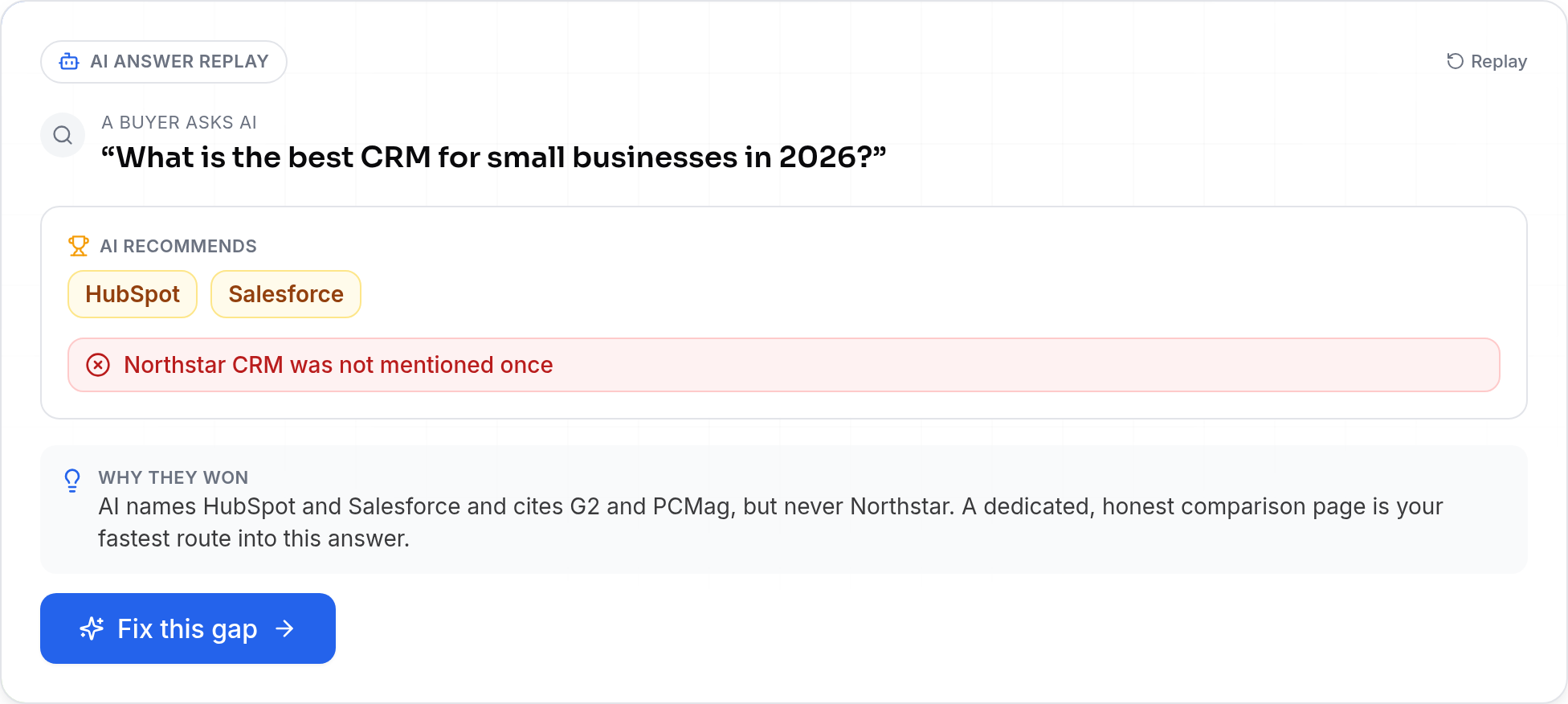
When SEOWedge runs a scan, it tests your discovered buyer questions against actual AI assistants—OpenAI (GPT) on all plans, and Google Gemini on paid. It records which brands and specific URLs are cited for each lifecycle or end-of-life query. If an AI answer cites an old, outdated page or a third-party site instead of your own, SEOWedge highlights this as a missed opportunity. The platform does not just show the brand; it names the exact page being recommended, so you know precisely what is standing in the way of your own site being cited.
This page-level diagnosis is critical for lifecycle queries, where outdated or incorrect information can damage trust. SEOWedge's Action Brief tells you why the AI answer skipped your site, what content is missing or outdated, and which competitor or third-party page is winning the citation. You get a clear, actionable path to fix the gap.
| AI Query | Who Gets Cited | Page Cited | Your Opportunity |
|---|---|---|---|
| Is [Product X] discontinued? | Third-party forum | forum.com/old-thread | Create authoritative end-of-life page |
| What replaces [Product Y]? | Competitor | competitor.com/replacement-guide | Publish replacement/upgrade guide |
| Where to get support for [Product Z]? | Your brand (outdated page) | yourbrand.com/old-support | Update support page for EOL status |
SEOWedge shows exactly which outdated or third-party pages AI assistants are citing for lifecycle queries.
How Does SEOWedge Turn Lifecycle Gaps Into Actionable Tasks?
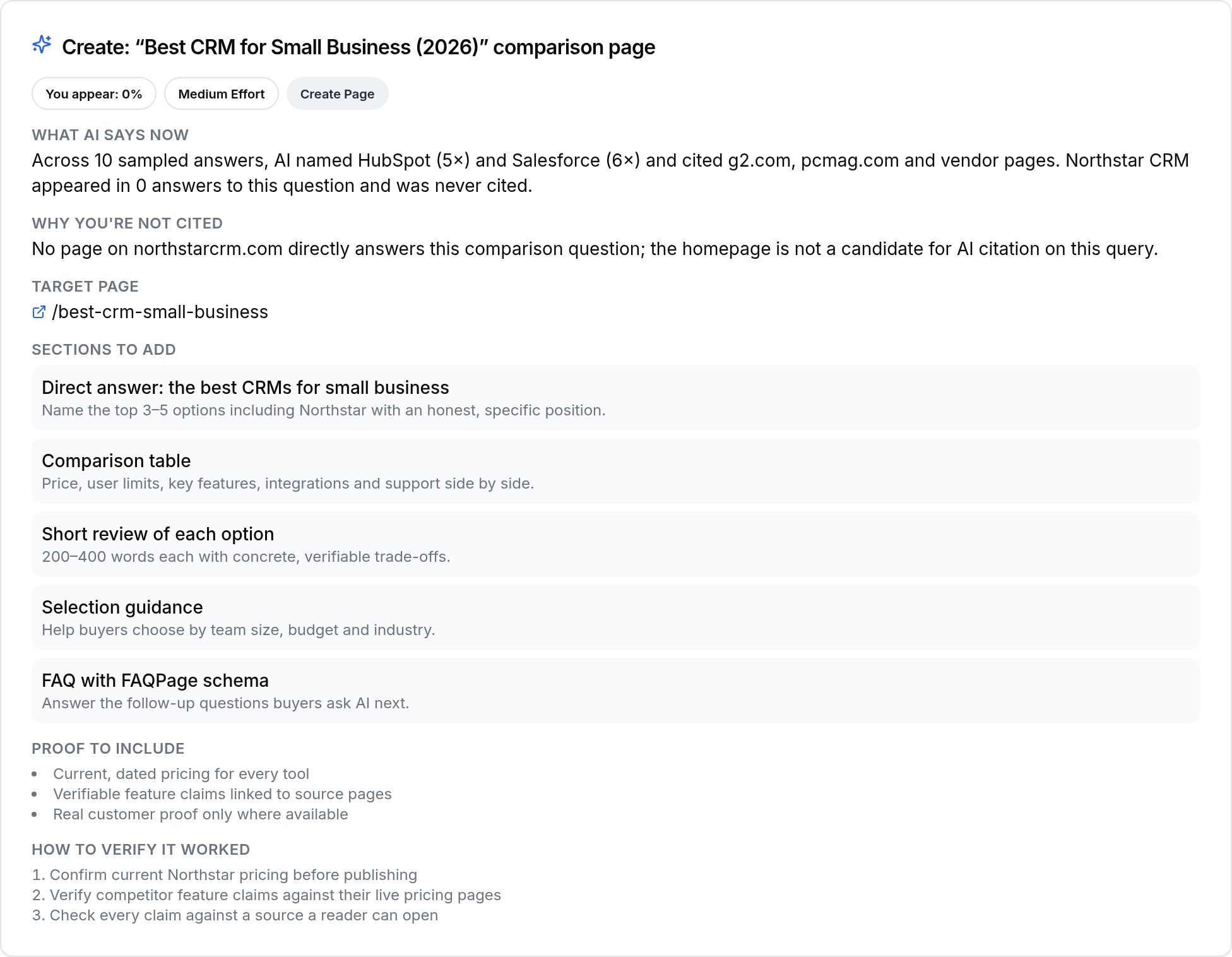
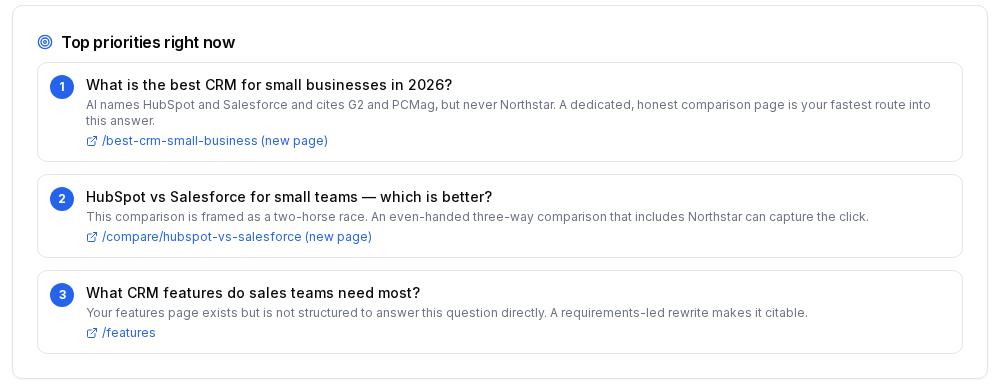
For every lifecycle or end-of-life content gap, SEOWedge generates an Action Brief. This brief contains the buyer question, the reason your site is not being cited, and the exact page to create or update. It removes guesswork: you see whether you need a new end-of-life announcement, a replacement product guide, or a support landing page for discontinued items.
Each Action Brief is prioritized by impact. For example, if AI assistants are recommending a competitor's replacement guide instead of yours, that brief will be ranked higher than a low-traffic support query. SEOWedge's workflow means you always know which lifecycle or EOL content to tackle first for maximum AI visibility.
| Action Brief Field | What It Tells You |
|---|---|
| Buyer question | What buyers are asking about your discontinued/EOL products |
| Why you're missing | The gap in your current content or page structure |
| Page to create or fix | The exact URL or topic needed for AI citation |
| Priority | How much closing this gap will move your AI visibility |
Each Action Brief spells out the next step for closing a lifecycle or end-of-life content gap.
How Does SEOWedge Generate Authoritative, Brand-Specific Content for Lifecycle Queries?
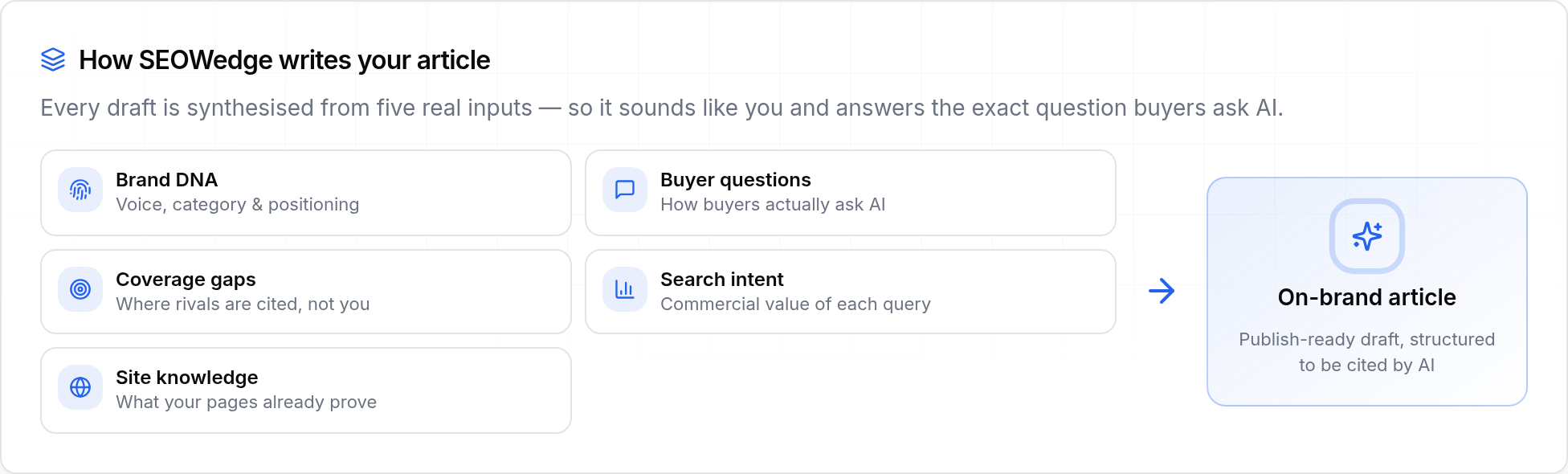
SEOWedge's Content Studio uses your Brand DNA profile to generate answer-ready pages for each Action Brief. This ensures every lifecycle or EOL page is written in your brand voice, with accurate, brand-specific details—never generic AI text. For example, a discontinued product announcement will reflect your actual support policies, warranty status, and recommended replacements, not boilerplate language.
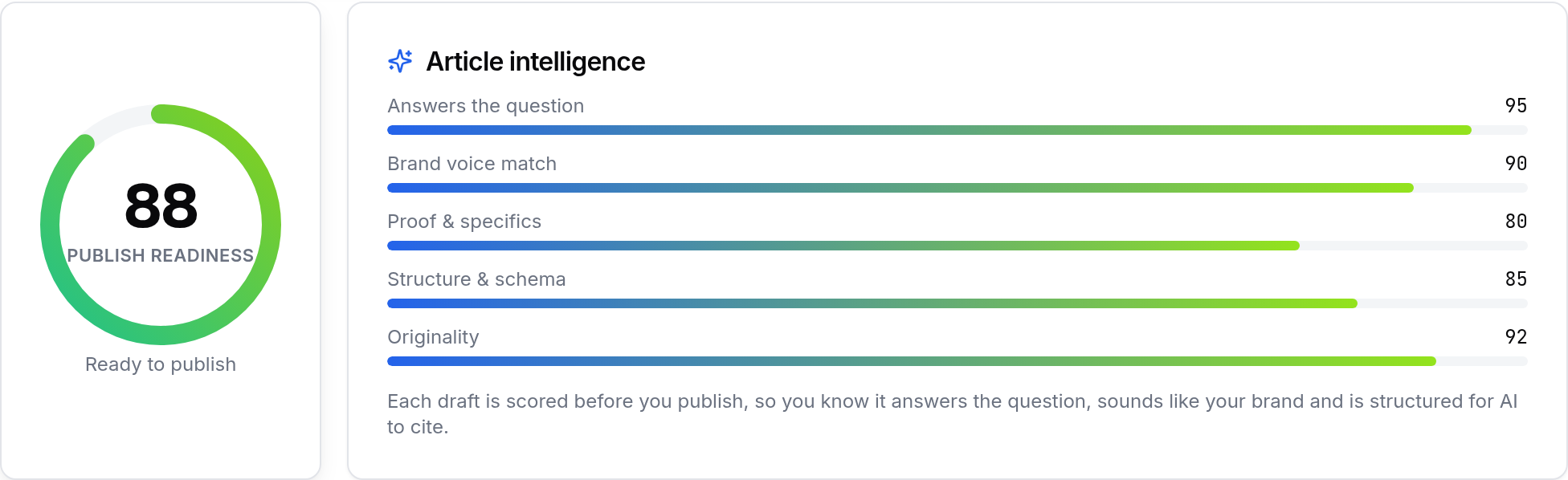
The Content Studio scores every draft with a Publish Readiness score. This score checks for answer structure, brand alignment, and coverage of the buyer question. You can edit, revise, and export the page before publishing. On paid plans, you can queue and generate several lifecycle or EOL pages at once, accelerating the process for brands with many discontinued products.
| Content Studio Feature | Benefit for Lifecycle/EOL Pages |
|---|---|
| Brand DNA profile | Ensures all content is on-brand and accurate |
| Publish Readiness score | Guarantees answer-ready structure for AI citation |
| Bulk generation (paid plans) | Draft multiple lifecycle pages at once |
| Edit and export | Full control before publishing live |
SEOWedge's Content Studio guarantees lifecycle and end-of-life content is on-brand and AI-citable.
How Do I Ensure My Updates Get Surfaced in AI Answers After Publishing?
Publishing the right page is only part of the job. SEOWedge supports surfacing your new or updated lifecycle content in AI answers by submitting URLs through IndexNow. This notifies participating engines the moment your page goes live, reducing the lag between publication and AI assistant discovery. While no tool can guarantee instant citation, this step accelerates the process compared to waiting for a standard crawl.
The Publish Readiness score also helps: it ensures your page structure matches what AI assistants look for when selecting a source. For Google Gemini and AI Overviews, this means covering the full family of lifecycle questions, not just one phrase. For OpenAI, it means making your end-of-life or discontinued product page accessible to OAI-SearchBot, as documented by OpenAI (OpenAI crawler documentation).
| After Publishing | SEOWedge Step | AI Assistant Impact |
|---|---|---|
| Submit via IndexNow | Yes (auto after export) | Faster discovery by engines |
| Publish Readiness check | Yes | Answer-ready structure for citation |
| Crawlability for OAI-SearchBot | Checked | Ensures ChatGPT can find the new page |
SEOWedge supports surfacing your lifecycle updates in AI answers after publishing.
How Is This Different from Classic SEO or Prompt-Based Tools?
Classic SEO tools do not measure whether your end-of-life or discontinued product pages are named in AI answers. They track rankings and traffic, not citations in generative engines. Prompt-based AI monitoring tools require you to write and maintain a list of lifecycle questions, then only track those prompts. SEOWedge discovers the lifecycle and EOL queries buyers actually ask, tests them against real AI answers, and gives you a one-click path to publish the missing page—no manual prompt writing or guesswork.
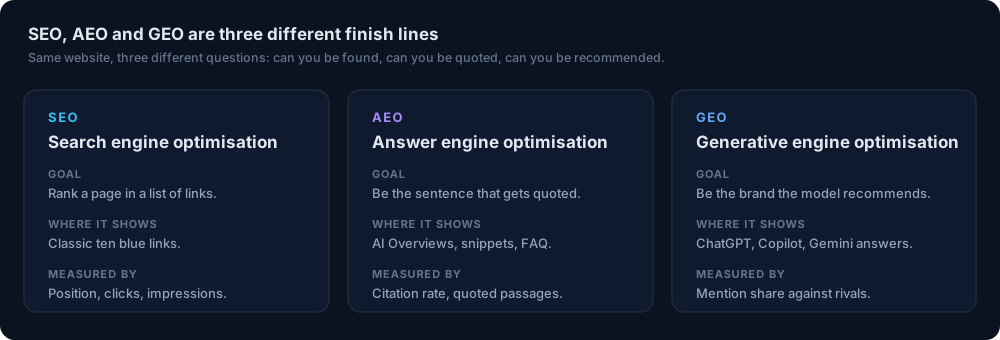
If you need a deeper technical breakdown of how AI assistants crawl and cite pages, or want to understand the difference between GEO, AEO, and classic SEO for lifecycle queries, see LLM SEO: Technical Guide to Optimising for Language Models and GEO vs AEO vs SEO: The Practical Definitions and When Each Matters.
| Tool Type | What You Must Do | Lifecycle/EOL Coverage |
|---|---|---|
| Classic SEO tool | Monitor rankings, update meta | Does not check AI citations |
| Prompt-based AI tool | Write/maintain prompts | Only tracks prompts you enter |
| SEOWedge | No prompts, auto discovery | All real buyer lifecycle queries |
SEOWedge covers real lifecycle/EOL queries by discovery, not manual prompt tracking or SEO ranking.
What Do I Get on Free vs Paid Plans for Lifecycle and End-of-Life Content Gaps?
The SEOWedge Free plan gives you a one-time Lite Scan (5 buyer questions, 1 Action Brief, 1 article) covering lifecycle and end-of-life queries if they are present in your category. This is enough to see if you have a critical gap for discontinued or out-of-production products and to generate one answer-ready page. Paid plans (Pro and Agency) unlock more scans, more discovered questions (12 or 25 per scan), more Action Briefs, and bulk article generation—key for brands with many legacy products or frequent discontinuations.
Paid plans also include Google Gemini coverage, so you see gaps in both OpenAI and Google AI answers. Credit top-ups let you extend any limit without changing plans, so even a one-off lifecycle update project can be handled without a long-term commitment. For a detailed breakdown of plan features and pricing, see SEOWedge Pricing.
| Plan | Lifecycle/EOL Questions Discovered | Action Briefs | Articles per Scan |
|---|---|---|---|
| Free | 5 | 1 | 1 |
| Pro | 12 | 8 | 30/month |
| Agency | 25 | Unlimited | 150/month |
Paid plans scale up lifecycle and end-of-life coverage—more questions, briefs, and articles per scan.
What Is My Next Step If I Want to Close Lifecycle or End-of-Life Content Gaps?
Start with the free scan: enter your domain and get an instant AI-Visibility score, competitor share of voice, and a prioritized Action Brief for your most critical gap—including lifecycle or end-of-life queries if they are present. Use the Content Studio to generate your first answer-ready page. If you have multiple discontinued products or need to cover both OpenAI and Google Gemini, upgrade to a paid plan for full scan and content generation capacity.
For more on how the workflow turns every gap into a concrete, on-brand page, see How SEOWedge Turns AI Visibility Gaps Into Actionable Content. If your lifecycle content needs to stay on-brand and legally sound, Can SEOWedge Write Pages That Match My Brand Voice? covers the Brand DNA system in detail.
| Step | What You Get |
|---|---|
| Free scan | AI-Visibility score, lifecycle gap diagnosis, 1 article |
| Action Brief | Next step spelled out for lifecycle/EOL queries |
| Content Studio | On-brand, answer-ready lifecycle page |
| IndexNow submission | Faster surfacing in AI answers |
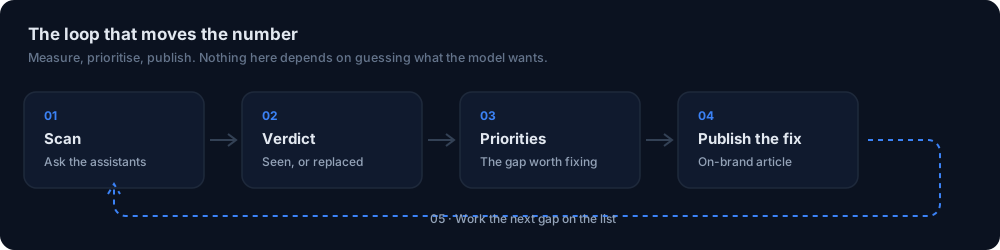
SEOWedge closes the loop: from gap discovery to published, AI-citable lifecycle content.
How this was tested
All claims and workflow steps on this page are based on SEOWedge's documented process as of 2026-08-28. Buyer questions are discovered from a live crawl and market scan. AI answer samples are taken from OpenAI (GPT) on all plans and Google Gemini on paid plans, with each answer dated and stored. Publish readiness is scored by SEOWedge's deterministic system. IndexNow submission is used after export to notify participating engines of updates. No claims are made about features or data outside the documented product facts and workflow.
What this page does not cover
This page covers only the process of identifying and closing content gaps for product lifecycle and end-of-life queries using SEOWedge. It does not cover classic SEO, prompt-based tracking, or technical site health outside of AI answer visibility. For broader GEO, AEO, or technical LLM SEO guidance, see Generative Engine Optimization (GEO): The Practical Guide or LLM SEO: Technical Guide to Optimising for Language Models.
Questions buyers ask us
How does SEOWedge know which lifecycle or end-of-life questions to check?
SEOWedge discovers buyer questions by crawling your site and scanning your market. It surfaces high-intent queries about discontinued, out-of-production, or end-of-life products automatically—no prompt writing required. This ensures you see the real questions buyers ask AI assistants, not just a guess or a keyword list.
What if AI assistants are still citing outdated or third-party pages after I publish new content?
AI assistants update their citations when they re-crawl and re-rank sources, which can take several weeks. SEOWedge submits your new URLs via IndexNow to participating engines, accelerating discovery. The Publish Readiness score ensures your page is structured for citation, increasing the chance it will be picked up in the next crawl cycle.
Can SEOWedge generate content that matches my brand's language and support policies for end-of-life products?
Yes. SEOWedge builds a Brand DNA profile from your site and uses it to generate content that matches your brand voice and policy details. You can review, edit, and export every page before publishing, so lifecycle and end-of-life answers always reflect your actual support terms and messaging.
Do I need to manually submit my new pages to search engines or AI assistants?
SEOWedge submits published URLs to IndexNow automatically after export. This notifies participating engines that your page is live or updated, speeding up the discovery process for AI assistants that use those engines. For OpenAI, allowing OAI-SearchBot is required for inclusion in ChatGPT search results.
Is SEOWedge only for lifecycle or end-of-life content, or can I use it for other product and support queries?
SEOWedge covers all high-intent buyer questions in your category, including product launches, upgrades, support, care, and more. The same workflow applies: scan, discover gaps, generate on-brand content, and accelerate AI citation. For other use cases, see the full SEOWedge resources hub.
How do I know if my new lifecycle content is actually being cited in AI answers?
After publishing, you can run another scan on a paid plan to see if AI assistants now cite your new page for the relevant lifecycle or end-of-life questions. SEOWedge records and dates every sampled answer, so you have a defensible record of citation movement.
See what AI assistants say about your site
Enter your domain and SEOWedge runs a free scan: your AI-Visibility score, the buyer questions where a competitor is named instead of you, and the first page to fix. No install, no sales call.