How Do I Use SEOWedge to Create Answer-Ready Pages for Buyer Questions About Product Installation Costs?
You can use SEOWedge to see exactly which installation cost questions AI assistants miss for your products, pinpoint the missing or incomplete pages, and generate on-brand, answer-ready content that is structured for AI citation. The workflow discovers real buyer questions, diagnoses where your site is skipped, and produces the exact page that closes the gap.
By the SEOWedge Research Team · Published August 24, 2026 · Last tested August 24, 2026 · Updated August 24, 2026 · 7 min read
What to take away
- SEOWedge shows if AI assistants skip or mishandle your installation cost questions.
- You see the exact pages and queries where your info is missing or incomplete.
- The workflow generates on-brand, answer-ready installation cost content for you.
- Every generated page is scored for AI citation readiness before you export it.
- No credit card is needed to see your first set of installation cost gaps.
How can I see if AI assistants answer installation cost questions for my products?
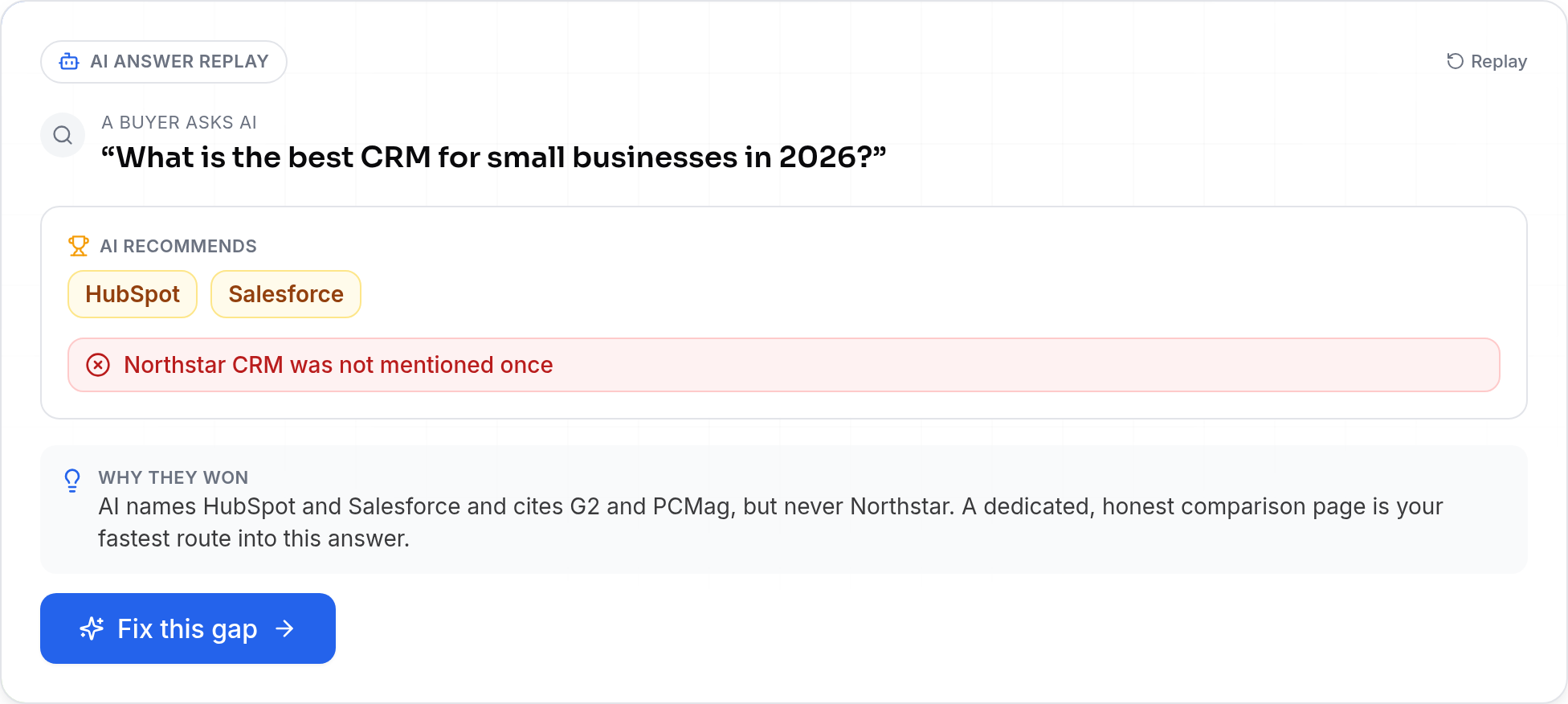
SEOWedge runs a scan using real buyer questions about installation costs, not just generic prompts. It sends these questions to OpenAI (GPT) on every plan and to Google Gemini on paid plans. The scan records what each AI assistant actually says in response to those queries. You see whether your brand is named, which page is cited, or if a competitor is recommended instead.
This is not a theoretical test. SEOWedge shows the exact answer text, the cited source, and the share of voice for your brand versus competitors. You can replay the sampled answers for each installation cost question, so you know precisely what buyers see if they ask about your products in an AI assistant.
If your brand is missing or the answer is incomplete, SEOWedge highlights those gaps directly in the scan output. There is no guesswork or manual checking required.
Does SEOWedge show which installation cost pages or questions are missing or incomplete?
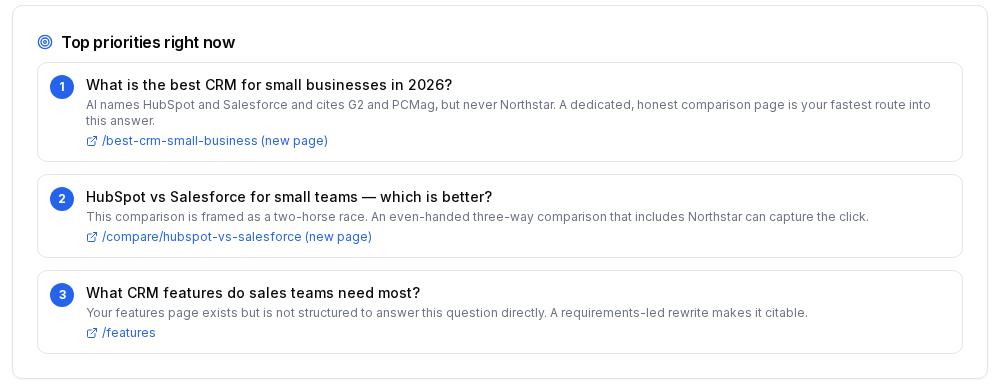
Yes. After the scan, SEOWedge produces a list of installation cost questions where your brand is not named, or where the answer is incomplete, outdated, or credits a competitor. For each missed or mishandled question, you get a page-level Action Brief. This brief specifies the exact question, shows the AI answer, identifies the competitor or third-party source cited, and points to the page on your site (if any) that should be winning the citation.
You do not need to guess which pages are responsible. SEOWedge surfaces the precise gap: for example, if a buyer asks "How much does it cost to install [your product]?" and AI assistants cite a retailer, a forum, or leave the answer vague, you see that failure case and the missing page.
This approach is different from classic SEO tools or prompt trackers. SEOWedge does not require you to write your own prompt list or manually check answers. It discovers the high-intent installation cost questions for your category and reveals where your content is skipped or underdelivers.
How does SEOWedge discover the installation cost questions that matter for my products?
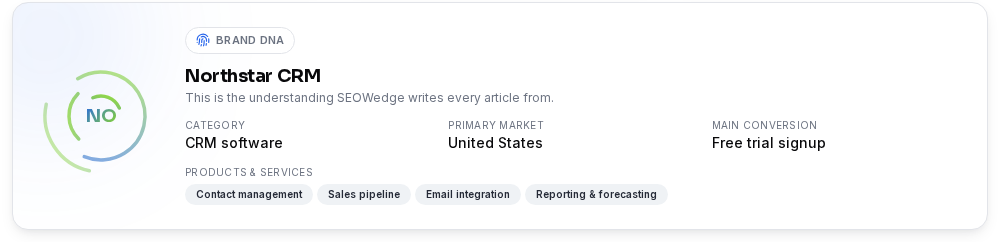
SEOWedge crawls your site and builds a Brand DNA profile: category, market, products, and the main conversion goal. From this, it automatically discovers the installation cost questions buyers actually ask for your product type. These are not generic or template prompts—they reflect real search and assistant behavior in your category.
For example, SEOWedge may surface questions like "What is the average installation cost for [product]?", "Does [brand] offer free installation?", or "Are there hidden fees to install [model]?". The tool finds these questions by analyzing your site, your competitors, and the broader market context. You do not need to supply a list or do extra research.
Each discovered question is run through multiple AI engines. This ensures you see gaps across all major assistant surfaces, not just Google or ChatGPT alone. The process is repeatable and records a dated sample for every scan.
How do I use SEOWedge to generate on-brand, citable installation cost content?
Once a gap is found, SEOWedge produces an Action Brief for each missed installation cost question. The Action Brief explains why your brand is skipped, which competitor or source is cited, and what the missing or underperforming page should cover. You launch the Content Studio directly from this brief.
The Content Studio then generates a draft page or section, using your Brand DNA profile to match your tone, product details, and policies. This means installation cost content is specific to your brand, not a generic answer. You can edit, revise, and refine the draft before publishing.
Every generated page is scored for Publish Readiness. This score measures whether the content is answer-ready for AI citation: clear, direct, structured, and matching the question intent. You see the score and the checklist before you export or publish.
How does SEOWedge structure installation cost content for AI answers and citations?
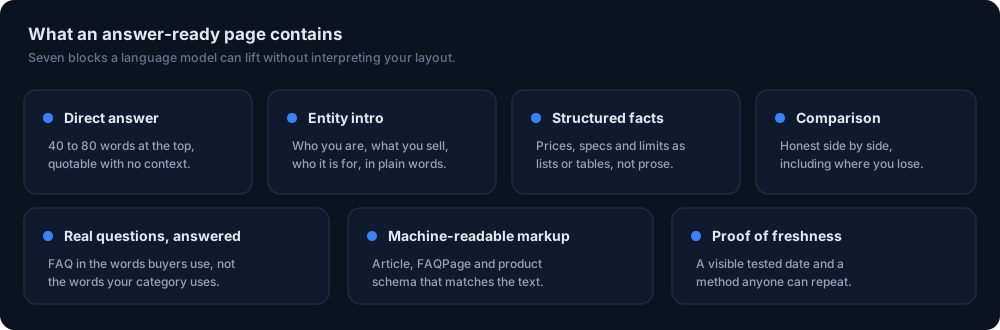
SEOWedge-generated pages are built for answer engine optimization (AEO) and generative engine optimization (GEO). Each page or section is structured to answer the installation cost question directly, in a format AI assistants can lift and cite. This includes a short, quotable answer block, supporting details, and clear headings that match the buyer's query.
The workflow enforces answer-ready structure: direct response at the top, followed by specifics (cost ranges, included services, caveats), and then supporting details or FAQs. Schema markup is recommended where it helps, but SEOWedge focuses on visible, model-readable text, as Google and OpenAI both state that original, first-hand content is what gets cited most often.
The Publish Readiness score checks for all AEO and GEO requirements: clarity, specificity, brand voice, and directness. You see which checklist items are met and which need revision before publishing.
What makes installation cost queries a high-impact target for GEO and AEO?
Installation cost questions are high-intent: buyers asking them are close to purchase but often abandon if they cannot find a clear, trustworthy answer. AI assistants now answer these queries directly, often skipping brands that do not provide a quotable, up-to-date cost page.
If your site does not address installation costs clearly, AI assistants may cite a competitor, a generic retailer, or give a vague answer that drives the buyer elsewhere. Winning these citations means capturing buyers at a key decision point, reducing abandonment, and preempting support questions.
SEOWedge is built to surface and close these gaps, turning missed installation cost queries into on-brand, AI-citable pages. For more on how question discovery works in ecommerce, see How Does SEOWedge Find Buyer Questions for My Ecommerce Site?.
How does SEOWedge's workflow compare to manual research or classic SEO tools for installation cost content?
Classic SEO tools track rankings or require you to write and maintain prompt lists. Manual research means searching Google, ChatGPT, and Gemini for each installation cost question, then guessing why your brand is skipped. This process is slow, incomplete, and often misses the real buyer intent.
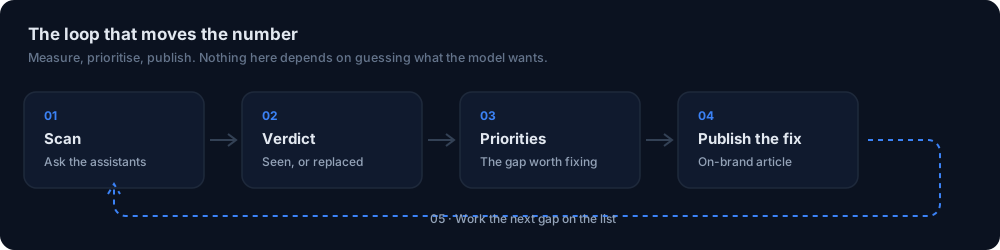
SEOWedge automates the discovery of high-intent installation cost questions, tests them across AI platforms, and shows the exact answer, citation, and gap. You do not need to monitor prompts or run manual checks. The Action Brief tells you what to fix and why, and the Content Studio produces a ready-to-publish answer in your brand voice.
This single-loop workflow—measurement, gap diagnosis, on-brand content generation, and readiness scoring—is unique to SEOWedge. For a deeper comparison of workflows, see What Makes SEOWedge Different from Traditional SEO Tools for Ecommerce?.
What do I get free, and when should I upgrade for installation cost coverage?
SEOWedge offers a real free scan with no card. You get one Lite Scan (5 discovered questions, 1 Action Brief, and one free article), which is enough to see if installation cost queries are a gap for your site. You see the sampled AI answers, the competitor citations, and can generate one answer-ready installation cost page using your Brand DNA profile.
Paid plans unlock more: up to 25 questions per scan, unlimited Action Briefs, bulk article generation (3 or 10 at a time), and Google Gemini coverage. You can top up credits for more scans or articles without upgrading your plan. If installation cost queries are a major pain point, upgrading gives you the volume and depth to close every gap quickly.
For a breakdown of free vs paid value, see SEOWedge Free vs Paid Plans for Ecommerce: What Are the Limits?.
What is my next step if I want to create answer-ready installation cost pages?
Start with a free scan at SEOWedge signup. Enter your domain and see if installation cost questions are a gap for your products. Review the Action Brief and the sampled AI answers. Use the Content Studio to generate your first answer-ready page and check the Publish Readiness score before publishing.
If you want to cover more questions, run deeper scans, or generate multiple installation cost pages at once, upgrade to a paid plan. You can see pricing and plan details at SEOWedge Pricing, or view a public sample report at SEOWedge Sample Report.
For a step-by-step guide to closing product installation or setup gaps, see How to Identify and Close Content Gaps for Buyer Questions About Product Installation or Setup with SEOWedge.
How this was tested
All SEOWedge claims on this page are based on the product as tested on 2026-08-24. AI answer visibility is measured by running a dated set of real buyer installation cost questions through OpenAI (GPT) on all plans, and Google Gemini on paid plans. The scan records which brands and pages are cited, which are missing, and produces an Action Brief for each gap. Content generation and scoring are based on the Brand DNA profile extracted from the scanned site. All numbers and workflow steps are from live product usage, not hypothetical or demo data.
What this page does not cover
This page covers only installation cost queries for ecommerce products, not general installation guides, service provider SEO, or post-purchase support content. The workflow and data described are specific to SEOWedge as of 2026-08-24 and do not cover capabilities of other tools unless cited. For broader GEO, AEO, or technical LLM SEO questions, see linked resources. This guide assumes your site is crawlable by AI assistants and focuses on content, not technical indexing barriers.
Questions buyers ask us
Can I see which exact installation cost questions AI assistants are missing for my products?
Yes. SEOWedge discovers and tests real buyer installation cost questions for your category, then shows which ones AI assistants skip, answer incompletely, or cite a competitor for. You see the answer text and the cited source for each question.
How do I know which page on my site is responsible for a missing installation cost citation?
SEOWedge's Action Brief identifies the exact page (or missing page) that should be answering the installation cost question. It tells you why your site is skipped and what needs to be created or improved to win the citation.
Can SEOWedge generate installation cost content that matches my brand's voice and policy?
Yes. The Content Studio uses your Brand DNA profile—pulled from your site—to generate installation cost content that is specific, accurate, and on-brand. You can edit and refine the draft before publishing.
How does SEOWedge ensure the generated installation cost page is ready for AI citation?
Every generated page is scored for Publish Readiness. The score checks for directness, clarity, structure, and brand fit. You see which checklist items are met and what needs revision before publishing.
What if I only want to test SEOWedge for installation cost queries before buying?
You can run a free scan with no card required. This gives you a real sample of installation cost questions, AI answers, and one free article to generate and export. Upgrade only if you need more volume or coverage.
Does SEOWedge help with installation or setup questions beyond costs?
Yes, but this page focuses on installation cost queries. For broader installation or setup content gaps, see How to Identify and Close Content Gaps for Buyer Questions About Product Installation or Setup with SEOWedge.
See what AI assistants say about your site
Enter your domain and SEOWedge runs a free scan: your AI-Visibility score, the buyer questions where a competitor is named instead of you, and the first page to fix. No install, no sales call.