
How Can I Use SEOWedge to Improve Visibility for Collection Pages in AI Search?
SEOWedge finds where your collection pages are missing from AI answers, shows which competitor pages are cited instead, and generates the exact content needed to close those gaps. You get an Action Brief for each missed opportunity and a ready-to-edit, on-brand page draft—so your collections can win citations in ChatGPT, Gemini, and other AI assistants.
By the SEOWedge Research Team · Published August 13, 2026 · Last tested August 13, 2026 · Updated August 13, 2026 · 6 min read
What to take away
- SEOWedge surfaces missed AI citations for your collection pages, not just products.
- You see which competitor or marketplace pages are being cited instead of yours.
- Each gap comes with a specific Action Brief and an on-brand page draft to close it.
- No prompt writing or manual question research needed—SEOWedge discovers the real buyer questions automatically.
- You can act on a free scan with no card required, and scale up with paid plans for bulk fixes.
Why Do Collection Pages Get Overlooked in AI Answers?
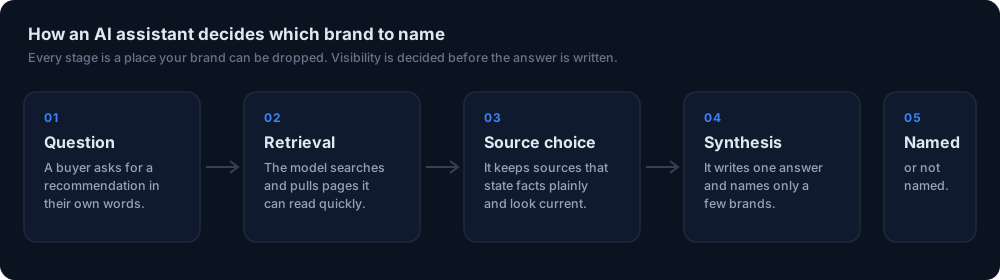
Collection pages—such as “summer dresses,” “gift sets,” or “bestsellers”—often fall through the cracks in AI answers. AI assistants like ChatGPT and Gemini tend to cite category or product pages with clear, direct answers to buyer questions. If your collection page is not structured to answer a real buyer query or lacks the signals AI models look for, it will be skipped in favor of a better-cited competitor or a marketplace listing.
Unlike product pages, collections rarely have rich schema, detailed Q&A, or unique editorial content. This makes them less likely to be surfaced by AI models that break down queries into sub-questions and look for authoritative, problem-solving content. Google’s documentation confirms that AI Mode uses a query fan-out technique, so your page must address the whole buying problem—not just list products (Google AI features and your website).
SEOWedge is built to diagnose these overlooked opportunities. It shows exactly when a collection page is missing from AI answers, which competitor or marketplace page is being cited instead, and what you can do to become the cited source.
How Does SEOWedge Identify Missed Opportunities for Collection Pages?
SEOWedge starts by crawling your site and extracting a Brand DNA profile, including your main product groupings and conversion goals. It then discovers the high-intent buyer questions that real shoppers ask about your category and collections—phrased in the language buyers use, not just keywords.
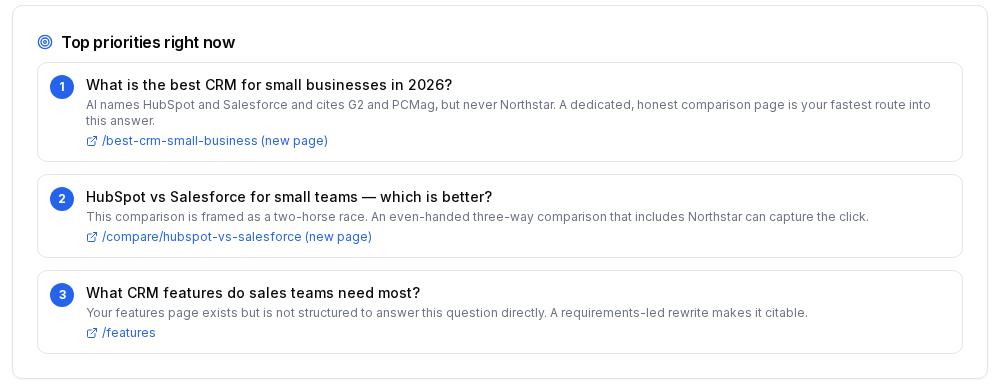
Each discovered question is sent to AI assistants (OpenAI on all plans, plus Google Gemini on paid plans). SEOWedge records which brands, sites, and specific pages are cited in the AI answers for each question. If your collection page is missing, SEOWedge shows exactly which competitor or marketplace page is being cited instead.
This process surfaces missed collection page citations that classic SEO tools or manual prompt tracking would never reveal. The result is a page-level opportunity list, with each gap tied to a real buyer question and the page that is currently winning the citation.
What Steps Can I Take to Optimize Collection Pages for AI Citation?
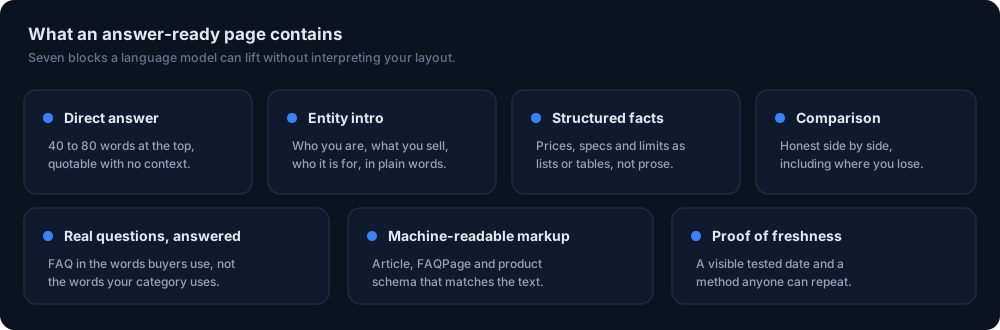
Once SEOWedge surfaces a missed opportunity, you receive an Action Brief for each collection page gap. The Action Brief tells you: the buyer question that triggered the AI answer, which competitor page is being cited, and why your collection page was skipped.
The next step is to use SEOWedge’s Content Studio to generate a new or revised collection page. The draft is built from your Brand DNA profile, ensuring it reflects your brand’s tone, product specifics, and conversion goals.
You can edit the draft directly in the Content Studio, add unique details, and review the Publish Readiness score. This score is deterministic—it checks for the answer structure, schema, and on-page cues that AI assistants look for when deciding to cite a page. Once the page is ready, you can export and publish it to your site.
How Do I Use SEOWedge's Briefs and Content Studio for Collection Pages?
The Action Brief is your step-by-step guide to closing a collection page gap. It spells out the buyer question, the current cited source, and what’s missing from your page. For example, if AI answers cite a competitor’s “eco-friendly gift sets” page for “best sustainable gifts,” the brief will show you why and prompt a content upgrade or new page.
In the Content Studio, you can generate a page draft directly from the brief. The draft follows your Brand DNA profile, so the voice, product selection, and calls-to-action match your store—not a generic template. You have full editing control before export.
Paid plans let you queue several collection or group page drafts at once. This is especially useful for stores with multiple seasonal, themed, or promotional collections. Each draft is scored for Publish Readiness so you know it meets AI answer standards before you go live.
Are There Special Considerations for Collection or Group Content?
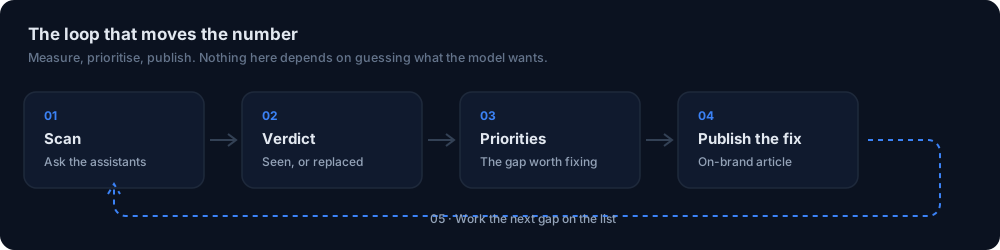
Collection pages must do more than list products to win AI citations. AI assistants look for pages that answer the whole buying problem: what to choose, why these items belong together, and how the collection solves a buyer’s need. Google’s AI Mode, for example, splits a question into sub-questions, so a collection page that explains the selection logic and includes direct-answer sections is more likely to be cited (Google: AI features and your website).
SEOWedge-generated drafts include blocks for buyer FAQs, collection highlights, and answer-ready copy. You can enrich these with unique editorial, testimonials, or expert tips to further increase citation odds. Schema markup for ItemList or CollectionPage can help, but only if the visible content matches what the schema claims—contradictions are penalized, not rewarded.
For time-sensitive or themed collections (e.g., holiday bundles, limited editions), SEOWedge allows you to generate and queue drafts quickly, so you can act on seasonal opportunities before they pass. For more on bundle and promo optimization, see this guide.
How Does SEOWedge's Loop Differ from Manual Research or Prompt Tracking?
Manual AI search optimization for collections means guessing buyer questions, writing prompts, and checking answers one-by-one. Most tools in this space require you to maintain a prompt list and pay by the number of prompts tracked. SEOWedge discovers the buyer questions for you, per scan, and ties each one to a real gap and a draft page.
The loop is: scan → discover buyer questions → see which pages are cited → get an Action Brief for each gap → generate and edit the missing collection page → publish and submit to IndexNow. This removes the manual work and guesswork that slow down classic GEO or AEO for group pages.
Because SEOWedge measures and produces the fix in one place, you can move from diagnosis to a ready-to-publish page in a single workflow. For a full breakdown of the SEOWedge workflow and how it compares to prompt-based tools, see this guide.
What Do I Get Free, and When Should I Upgrade for Collection Page Coverage?
Every SEOWedge user gets one free scan (no card required) that discovers five buyer questions, one Action Brief, and a single on-brand article draft. This is enough to diagnose and act on your most critical collection page gap—especially if you have one flagship collection or group offer.
Paid plans unlock more: up to 25 buyer questions per scan, unlimited Action Briefs, and bulk article generation. Pro plan ($29/month) covers five projects and up to 30 articles per month. Agency plan ($99/month) supports 25 projects, 150 articles, and white-label reporting for agencies. Both allow credit top-ups if you need to generate more collection or group pages during a busy season.
You never have to upgrade just to see your first result. If your store has many collections or frequent promotions, upgrading lets you close multiple gaps at once and keep up with changing buyer questions.
| Plan | Buyer Questions/Scan | Action Briefs/Scan | Articles/Month | Bulk Articles at Once |
|---|---|---|---|---|
| Free | 5 | 1 | 1 | 1 |
| Pro | 12 | 8 | 30 | 3 |
| Agency | 25 | Unlimited | 150 | 10 |
SEOWedge plan features for collection page optimization
What’s My Next Step to Improve Collection Page Visibility in AI Search?
Start with a free scan—no card needed—at SEOWedge signup. Enter your domain, and within minutes you’ll see which of your collection or group pages are missing from AI answers, which competitors are being cited, and get an Action Brief with a ready-to-edit draft.
If you want to cover more collections, run scans across multiple projects, or generate several drafts at once, review the SEOWedge pricing and plan details. For practical examples, see the public sample report or browse the resources hub for deep dives on GEO, AEO, and AI search visibility for ecommerce.
SEOWedge is the only tool in this category that closes the loop for collection pages: it measures the gap, names the competitor, and writes the page that closes it—all from your own brand profile. That’s how you move from missed opportunity to cited source in AI answers.
How this was tested
All product and workflow claims are based on the SEOWedge platform as tested on 2026-08-13. SEOWedge measures AI visibility by sampling answers from OpenAI (GPT) and, on paid plans, Google Gemini, using buyer questions discovered from a live crawl of the site and its market. Each scan records which brands and pages are cited for each question. Action Briefs and content drafts are generated from the Brand DNA profile extracted during the crawl. Screenshots are from the current SEOWedge interface as of the test date.
What this page does not cover
This page addresses collection and group page visibility in AI search, specifically for ecommerce brands and agencies. It does not cover classic SEO, product page optimization, or technical LLM SEO (see LLM SEO: Technical Guide). Workflow and plan details are current as of 2026-08-13 and may differ for non-ecommerce or enterprise use cases. For category page specifics, see this guide.
Questions buyers ask us
Does SEOWedge work for both static and dynamic collection pages?
Yes. SEOWedge crawls both static and dynamically generated collection or group pages, as long as they are publicly accessible and not blocked by robots.txt. For best results, ensure that OAI-SearchBot and Gemini crawlers are allowed. See OpenAI crawler documentation.
How do I know if my collection page is the one being cited by AI assistants?
SEOWedge records which exact URL is cited for each buyer question and AI assistant. The Action Brief will show if your collection page is named, missed, or if a competitor’s page is winning the citation. You see this at the page level, not just the brand level.
Can I use SEOWedge to optimize themed or seasonal collections?
Yes. SEOWedge’s workflow supports time-sensitive or themed collections. You can generate and queue drafts for holiday, event, or promotional collections, ensuring you act on seasonal opportunities before they pass. Paid plans allow bulk generation for multiple campaigns.
What’s the difference between a collection page and a category page in SEOWedge?
A category page usually targets a broad product type (e.g., "men’s shoes"), while a collection page may group products by theme, trend, or promotion (e.g., "back-to-school essentials"). SEOWedge treats both as potential citation sources, but the buyer questions and Action Briefs are tailored to the intent and structure of each page type. For category-specific optimization, see this guide.
Does SEOWedge-generated content for collections match my brand’s voice and product selection?
Yes. Each draft is built from your Brand DNA profile, extracted during the site crawl. This ensures the content, product highlights, and calls-to-action reflect your actual store and brand, not a generic template. You can review and edit every draft before publishing.
How quickly can I see changes in AI citations after publishing a new or revised collection page?
AI assistants update their sources when they re-crawl the web, which typically takes days to weeks. SEOWedge scores your page for Publish Readiness, and you can submit new URLs through IndexNow to notify engines faster (IndexNow documentation).
See what AI assistants say about your site
Enter your domain and SEOWedge runs a free scan: your AI-Visibility score, the buyer questions where a competitor is named instead of you, and the first page to fix. No install, no sales call.