Can SEOWedge Help Me Get My Brand Cited in AI-Powered Product How-To Guides?
SEOWedge identifies which AI-powered how-to or instructional queries matter for your product category, shows which brands and pages are currently cited, and provides a step-by-step workflow to create or improve your own how-to content so your brand is named in future AI answers. It generates on-brand, answer-ready pages from your Brand DNA, scoring each for AI citation readiness.
By the SEOWedge Research Team · Published August 26, 2026 · Last tested August 26, 2026 · Updated August 26, 2026 · 7 min read
What to take away
- SEOWedge discovers the high-intent how-to questions buyers actually ask about your category.
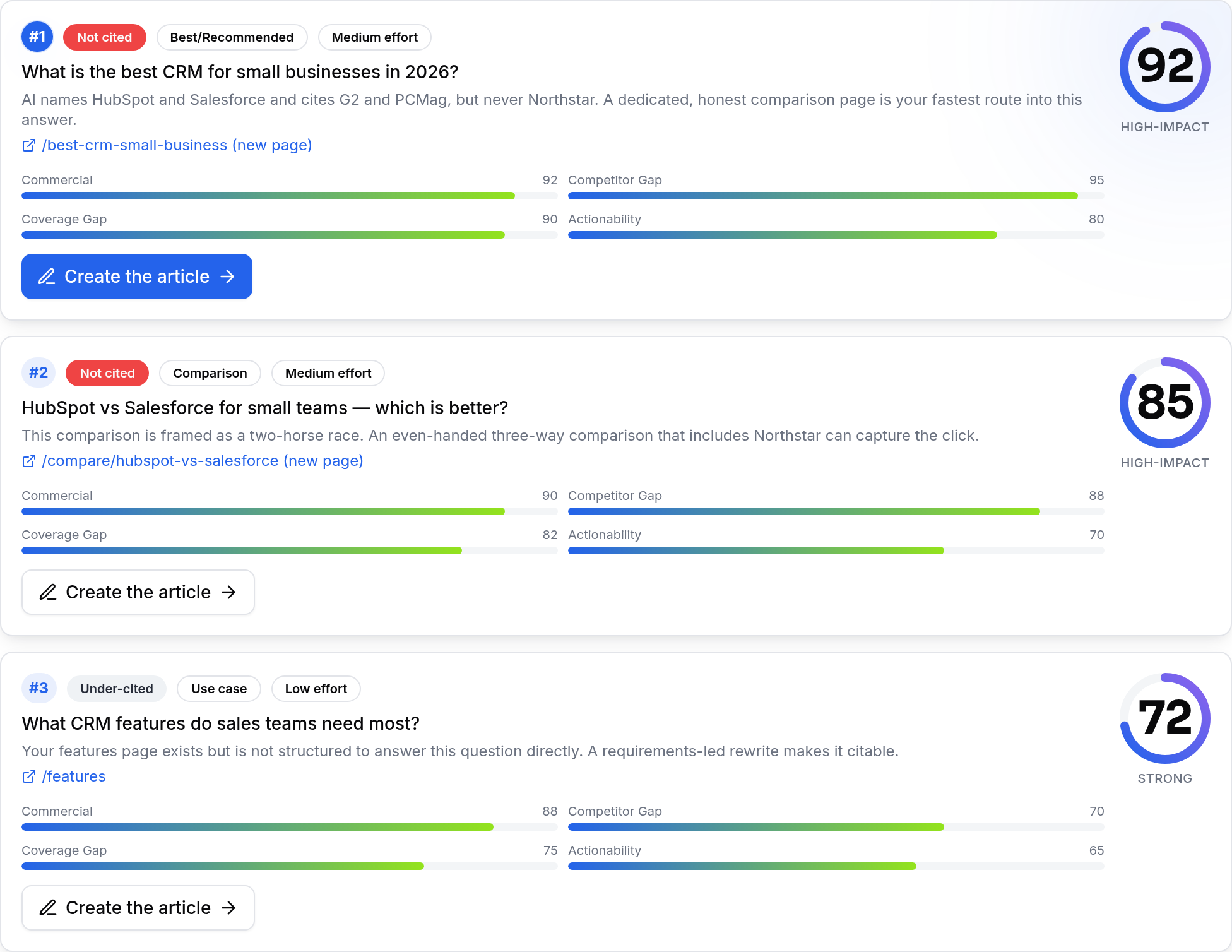
- You see which competitors and pages AI assistants cite in instructional answers—not just brand names, but the exact URLs.
- Action Briefs tell you what page to create or fix to win the citation, and why your brand was missed.
- The Content Studio generates on-brand, answer-ready how-to guides, scored for AI citation before you publish.
- You get a free scan with no card, so you can see your how-to citation gaps instantly.
How Does SEOWedge Find Which How-To Queries Matter for My Category?
SEOWedge starts by crawling your ecommerce site and extracting a Brand DNA profile—category, market, products, and your main conversion goal. It then discovers the high-intent buyer questions that real shoppers ask in your category, including specific how-to and instructional queries. These are not generic prompts; they are phrased exactly as buyers type them into AI assistants.
For example, if you sell kitchen appliances, SEOWedge might discover queries like "how to use an air fryer for frozen foods" or "step-by-step guide to cleaning a blender." This discovery is automatic and does not require you to submit your own list of prompts. Every scan surfaces a fresh, market-reflective set of how-to questions, so you see what is actually driving instructional AI answers in your space.
This approach ensures you are not guessing which how-to topics matter. You get a prioritized list of actionable, buyer-driven instructional queries that are already being answered by AI assistants in your category.
Can SEOWedge Show Which Brands and Pages Are Cited in AI How-To Answers?
For each discovered how-to or instructional query, SEOWedge sends it to leading AI assistants (OpenAI GPT on all plans, Google Gemini on paid plans) and records the exact brands and source pages named in the answers. You see not just which competitors are cited, but also the specific URLs and passages that AI assistants are lifting for their how-to recommendations.
This means you can identify if your brand is missing from key instructional answers, and see which competitor pages are winning those citations. SEOWedge also shows when third-party review sites or content aggregators are being cited instead of your own product pages.
You do not have to rely on anecdotal checks or manual prompt testing. SEOWedge stores these AI answer samples with timestamps, so you have a defensible record of which brands and pages are being surfaced for how-to queries at the time of your scan. This is the foundation for a credible, repeatable GEO or AEO workflow.
How Does SEOWedge Diagnose Why My Brand Is Missing from AI How-To Guides?
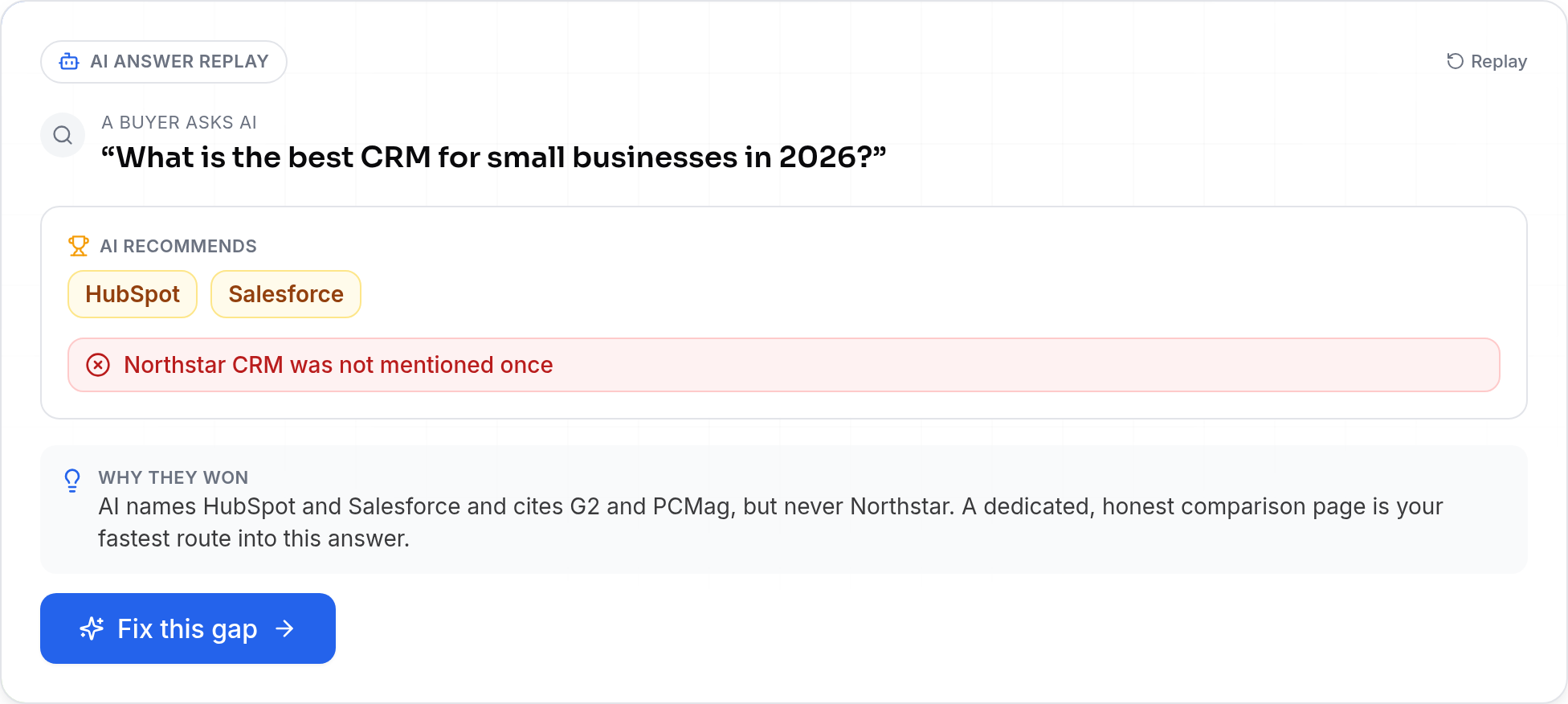
When your brand or product is not cited in a key how-to answer, SEOWedge produces an Action Brief for that opportunity. The Action Brief explains: the exact how-to question buyers are asking, which brands and pages are being cited instead, and why your current content is being skipped by AI assistants.
The diagnosis includes whether the issue is content depth, missing step-by-step detail, lack of clear instructions, or simply that a competitor’s page is more directly structured for AI retrieval. You see the precise gap—not just that you are missing, but what needs to change for your brand to be named in future instructional answers.
This step saves hours of manual research. Instead of reading through dozens of AI answers and guessing at the cause, you get a clear, actionable brief for each missed how-to citation.
What Steps Does SEOWedge Provide to Help Me Win How-To Citations?
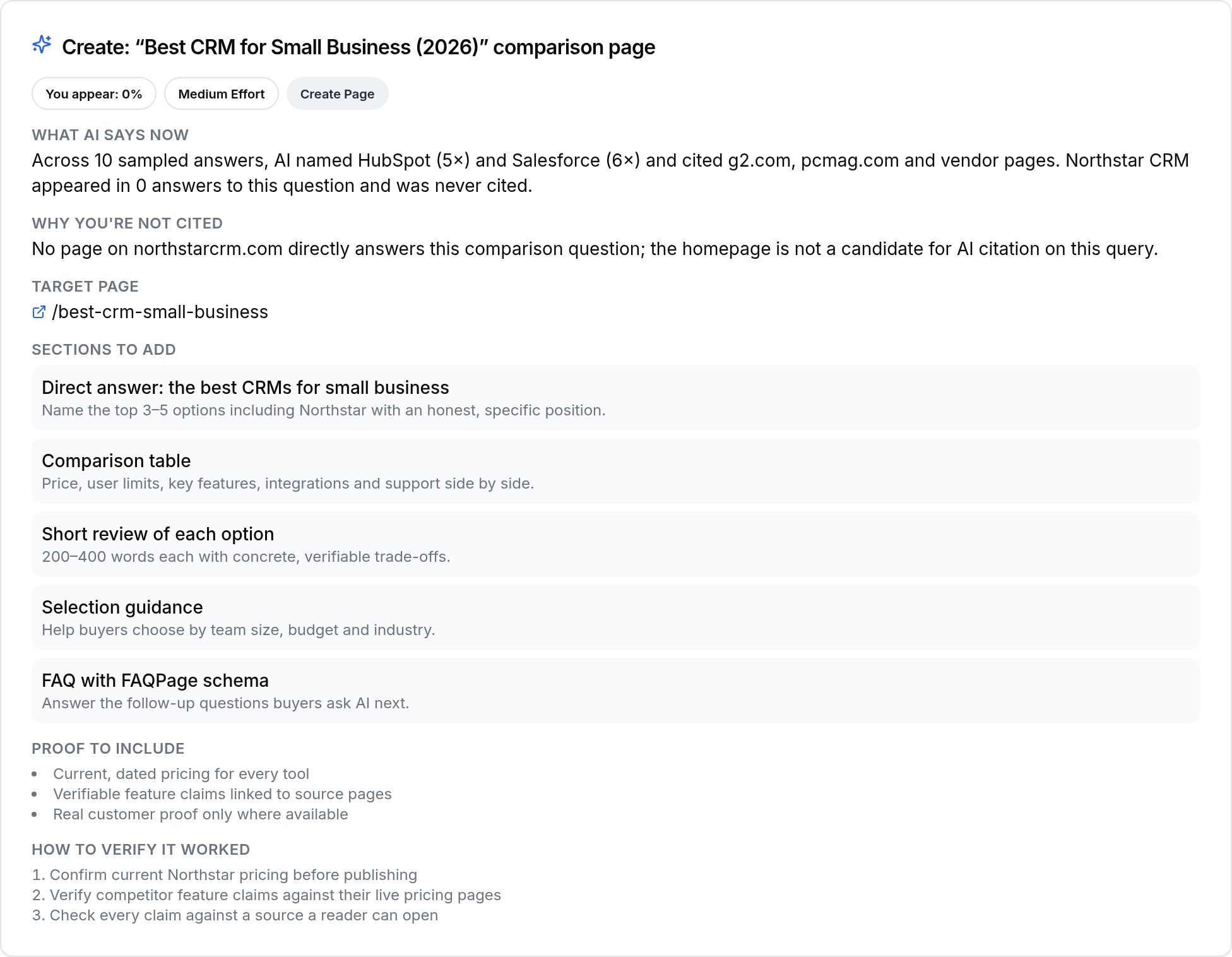
SEOWedge turns each Action Brief into a concrete workflow:
1. You review the discovered how-to question and see which competitor or third-party page is currently cited.
2. The Action Brief tells you what is missing or weak in your current content.
3. You use the Content Studio to generate a new how-to page, or revise an existing one, based on your Brand DNA profile and the exact instructional gap.
4. Each draft is scored for Publish Readiness, so you know before publishing if the page is likely to be picked up by AI assistants.
5. Once published, SEOWedge submits the new or updated URL through IndexNow to notify participating search engines and AI platforms as soon as possible.
This loop—diagnose, brief, generate, score, publish—removes the manual guesswork and lets you move directly from missed citation to answer-ready how-to content.
Does SEOWedge Generate the Actual How-To Content?
Yes. SEOWedge’s Content Studio writes the missing how-to or instructional page for you, drawing on your Brand DNA profile to ensure the result is on-brand and specific to your product. The system does not generate generic, one-size-fits-all content; it reflects your actual products, voice, and conversion goals.
The generated how-to guide follows the formats that AI assistants prefer: clear step-by-step instructions, direct answer blocks, and structured markup where relevant. Each draft is scored for Publish Readiness—a deterministic measure of whether the page structure, clarity, and brand alignment meet the standards for AI citation.
You can review, edit, and export the page before publishing. On paid plans, you can queue several how-to articles at once, supporting efficient bulk creation for brands with multiple products or instructional gaps.
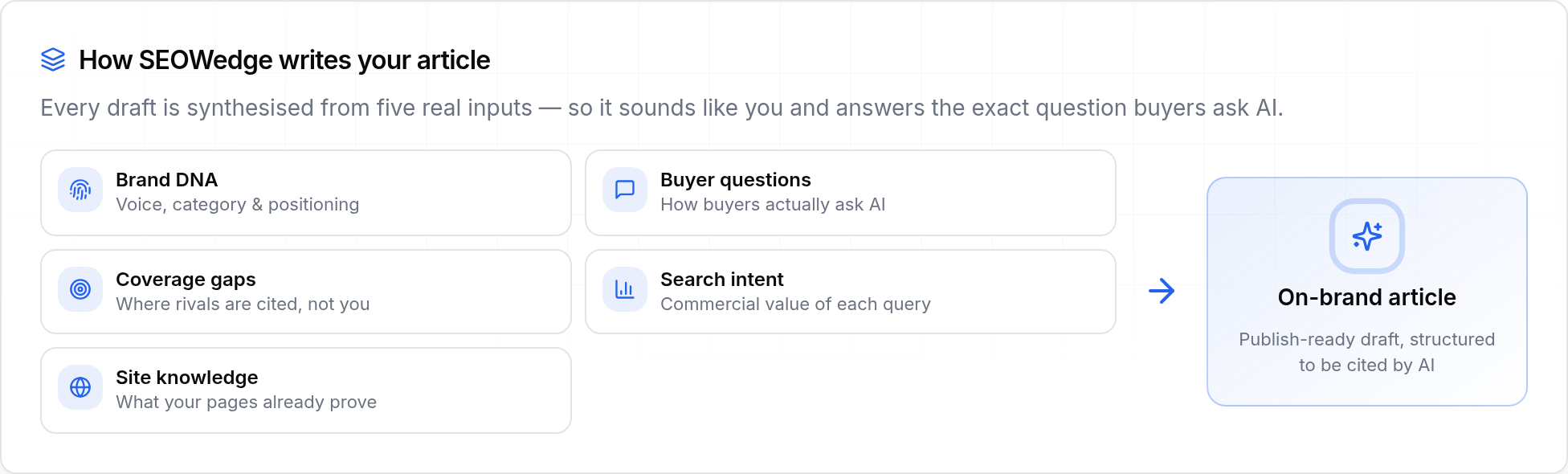
How Does SEOWedge Ensure My How-To Content Is On-Brand and AI-Ready?
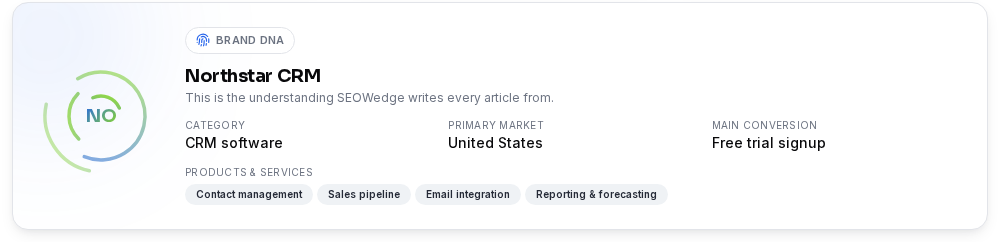
The Brand DNA profile is built automatically from your site crawl. It captures your product categories, market positioning, and preferred brand voice. Every how-to page generated by SEOWedge uses this profile to ensure the content matches your style, language, and product specifics—not just a generic template.
The Publish Readiness score is objective: it checks for direct, stepwise instructions, clarity, and the elements that AI assistants need to cite your page. This score is visible before you export or publish, so you know if the content is ready or needs revision. You can make edits directly in the Content Studio and re-score as needed.
This approach means you do not have to compromise between speed and brand control. Every page is both on-brand and structured for maximum AI citation potential.
How Is This Different from Classic SEO or Prompt-Based Tools?
Classic SEO tools focus on keyword rankings and organic traffic, not on whether your brand is cited in AI-powered how-to guides. Prompt-based AI visibility tools ask you to write and maintain a list of prompts, then track if your brand is named in those answers. SEOWedge does not require you to guess the right prompts or manage a prompt list.
Instead, SEOWedge discovers the real buyer questions driving how-to answers in your category, tests them automatically, and shows both the citation gap and the exact page to fix. The workflow is built around GEO (Generative Engine Optimization) and AEO (Answer Engine Optimization), which are focused on being the cited source in AI-generated answers—not just ranking for keywords.
If you need a step-by-step breakdown of how SEOWedge turns AI visibility gaps into actionable content, see How SEOWedge Turns AI Visibility Gaps Into Actionable Content.
What Do I Get for Free, and When Should I Upgrade?
The SEOWedge free plan gives you a one-time Lite Scan: five discovered buyer questions (including how-to and instructional queries), a share-of-voice breakdown, and one Action Brief with a free article generated from your Brand DNA. No card is required. This is enough to see if your brand is missing from key AI how-to answers and to try the full workflow on a real gap.
Paid plans increase the number of questions discovered per scan (up to 25 on Agency), unlock scans across multiple projects, add Google Gemini as a tested provider, and let you generate and queue multiple how-to articles at once. You can also buy credit packs to extend limits without changing plan, making it flexible for busy seasons or large product catalogs.
If your goal is to close more than one how-to gap, cover multiple products, or track both OpenAI and Google Gemini answers, upgrading to Pro or Agency will unlock the full workflow. See SEOWedge Pricing for plan details.
| Plan | How-To Questions Discovered/Scan | How-To Articles/Month | Providers Tested |
|---|---|---|---|
| Free | 5 | 1 (lifetime) | OpenAI (GPT) |
| Pro | 12 | 30 | OpenAI (GPT) + Google Gemini |
| Agency | 25 | 150 | OpenAI (GPT) + Google Gemini |
SEOWedge plan comparison for how-to guide coverage
What Is the Next Step If I Want to Get Cited in AI How-To Guides?
If you want to see where your brand stands in AI-powered how-to answers, start with a free scan—no card required. You will get a real AI-Visibility score, see which instructional queries matter, and receive your first Action Brief and generated article. This is the fastest way to diagnose your how-to citation gaps and see the workflow in action.
For a public example, view the sample SEOWedge report. If you need to cover multiple products, categories, or want to track both OpenAI and Google Gemini, review the pricing page for plan options. For deeper background on GEO, AEO, and how AI assistants choose sources, see the GEO guide or AEO guide.
SEOWedge is built for ecommerce brands and agencies who want to move from missed citations to published, answer-ready how-to content in a single loop—not just measurement, but action.
How this was tested
All numbers and workflow steps are based on SEOWedge's product as of 2026-08-26. Query discovery, citation measurement, and content generation are performed on real buyer questions auto-discovered from the scanned ecommerce domain and its category. AI answer samples are collected from OpenAI (GPT) on all plans and Google Gemini on paid plans. Each answer is recorded, scored, and linked to the cited source page. Action Briefs and content synthesis are generated using the Brand DNA profile extracted from the site crawl. Publish Readiness is a deterministic score based on content structure and brand match, not a subjective or generic AI output.
What this page does not cover
This page covers how SEOWedge identifies and closes AI citation gaps specifically for product how-to and instructional queries. It does not cover classic SEO ranking, FAQ-only workflows, or non-product/service verticals. For other use cases—such as product comparison, buying guides, or service pages—see the dedicated guides linked below. Data and workflow descriptions apply to ecommerce brands and agencies using SEOWedge as of August 2026.
Questions buyers ask us
How does SEOWedge discover which how-to questions buyers actually ask?
SEOWedge crawls your site and its category, then automatically extracts real, high-intent buyer questions—including how-to and instructional queries. These are based on what real shoppers type into AI assistants, not on a static keyword list or prompts you must write. This ensures the questions reflect current buyer needs and AI answer trends.
Can I see which specific competitor pages are cited in AI-powered how-to guides?
Yes. SEOWedge records the exact URLs and passages cited by AI assistants for each discovered how-to question. You see which competitor or third-party page is being named, so you can target the real source behind your citation gap—not just a brand name or domain.
Does SEOWedge generate unique, on-brand how-to content or just generic AI text?
Every how-to page is generated from your Brand DNA profile, which is extracted during the site crawl. This ensures the content matches your product details, brand voice, and conversion goals. The Publish Readiness score checks for both answer structure and brand alignment before you export or publish.
How do I know if my new how-to guide is ready to be cited by AI assistants?
SEOWedge scores every generated or revised page for Publish Readiness. This score is deterministic, based on answer structure, clarity, and brand fit—not a subjective or generic AI quality check. You can review and edit the draft until it meets the readiness threshold.
What is the difference between SEOWedge and prompt-based AI visibility tools?
Prompt-based tools require you to write and maintain a list of prompts, then track if your brand is named in those answers. SEOWedge discovers the real buyer questions automatically, tests them, and produces Action Briefs and content for each gap. This removes manual prompt management and ensures you are acting on what buyers and AI assistants actually care about.
Can I try SEOWedge before paying, and what do I get for free?
Yes. The free plan includes a one-time Lite Scan, five discovered questions (including how-to queries), one Action Brief, and one free article generated from your Brand DNA. No card is required. This is enough to see your instructional citation gaps and try the workflow before upgrading.
See what AI assistants say about your site
Enter your domain and SEOWedge runs a free scan: your AI-Visibility score, the buyer questions where a competitor is named instead of you, and the first page to fix. No install, no sales call.